Quick answer
Mold spores are microscopic reproductive cells released by mold. They are in nearly all indoor and outdoor air, so the goal isn't zero spores. What matters is whether indoor levels and spore types differ from outdoor air, which usually points to a moisture source inside the home. A professional air test compares indoor samples with an outdoor control and pairs the lab results with moisture readings.
Key takeaways
- Mold spores are everywhere. Finding some indoors is normal; finding more, or different types, than outside is the signal.
- Spores only grow into mold where there's moisture. Fixing water is always the first step.
- Bay Area fog, older homes, crawlspaces and rainy-season storms are the most common local reasons for indoor moisture.
- DIY settle plates almost always grow something and can't compare indoor air with outdoor air.
- A professional test uses a measured air volume, an outdoor control and an independent lab, plus an inspector who looks for the source.
This guide is general information, not medical advice. If you have health concerns, please consult a medical professional.
What mold spores actually are
Mold is a type of fungus, and like many fungi it spreads by releasing spores. A spore is a tiny cell, usually between about 2 and 100 microns across. For comparison, a human hair is roughly 50 to 70 microns wide, so most spores are invisible to the naked eye. You only see mold once millions of cells have grown together into a colony.
Spores are built to travel. They drift on air currents, ride on clothing, pets and shoes, and settle on nearly every surface in a home. Most of the time they simply sit there, dormant. They only start to grow when they land somewhere with the right mix of moisture, food and temperature. Unfortunately for homeowners, food is easy: drywall paper, wood, dust, carpet backing and even soap scum can feed mold. Temperature is rarely a limit in a lived-in home. That leaves moisture as the one factor you can actually control.
This is the single most important idea in this guide. The U.S. EPA puts it plainly: the key to mold control is moisture control. Spores are the seeds, but water is what lets them sprout.

Are mold spores in every home?
Yes. Outdoor air carries spores all year, and they come inside every time a door or window opens and through normal ventilation. A home with no spores at all would be as unusual as a home with no dust. That's why a single number on its own tells you very little.
Professionals look at three things instead. First, how the total indoor spore count compares with the outdoor count taken the same day. Second, whether the types of spores indoors match the types outdoors. Third, whether certain types that tend to grow on wet building materials show up indoors in noticeably higher numbers. When indoor air looks like a diluted version of outdoor air, that's generally what you'd expect. When indoor air has more spores, or a different mix, that suggests something is growing inside.
Compare every room with the outdoor sample
Illustration only. Similar or lower than outdoors is generally expected; noticeably higher, or a different mix of spore types, points to an indoor source worth investigating.
Common types of spores found in Bay Area homes
Laboratory reports list spores by genus or group. You don't need to memorize them, but knowing the common names makes a report much easier to read.
- Cladosporium: one of the most common outdoor spores worldwide. Often present indoors because it comes in from outside, but it can also grow on damp window frames and fabrics.
- Penicillium/Aspergillus: often grouped together because they look alike under a microscope. Common outdoors, but elevated indoor counts are frequently linked to water-damaged materials, dusty HVAC systems or hidden leaks.
- Alternaria: a common outdoor spore that can also grow indoors around showers, window sills and damp carpet.
- Stachybotrys: often called 'black mold'. It needs materials that stay wet for a long time, such as drywall after a slow leak. Its spores are heavy and sticky, so even a few in an air sample can be meaningful to an inspector.
- Chaetomium: another spore associated with long-term water damage to drywall and wood.
- Basidiospores and ascospores: large groups that are mostly outdoor spores from mushrooms and plants, and often spike after rain.
Why some Bay Area homes collect more spores
The Bay Area packs an unusual number of microclimates into a small space, and that shows up inside homes. Two houses ten minutes apart can have completely different moisture patterns.
On the western side of San Francisco, in Pacifica and along the coast, summer fog is a daily fact of life. Marine air carries moisture, and in homes with limited heat and ventilation, north-facing rooms, closets and window frames can stay damp for months. In the Oakland and Berkeley hills, Marin and parts of the Peninsula, many homes sit on slopes above crawlspaces where rainwater collects. In the flatlands and older neighborhoods, the housing stock is often 60 to 120 years old, with original plumbing, single-pane windows and bathrooms that were built without exhaust fans.
Then there's the rainy season. Atmospheric-river storms can drop several inches of rain in a few days. That tests every roof, gutter, window seal and foundation drain at once. Small leaks that go unnoticed in a dry year can soak wall cavities and subfloors, and the mold that follows often isn't visible until months later.

Aim for 30–50% relative humidity
The U.S. EPA recommends keeping indoor humidity below 60%, ideally 30–50%.
Where spores turn into mold: the usual hiding places
Mold grows where water lingers. In Bay Area homes, these are the places inspectors check first:
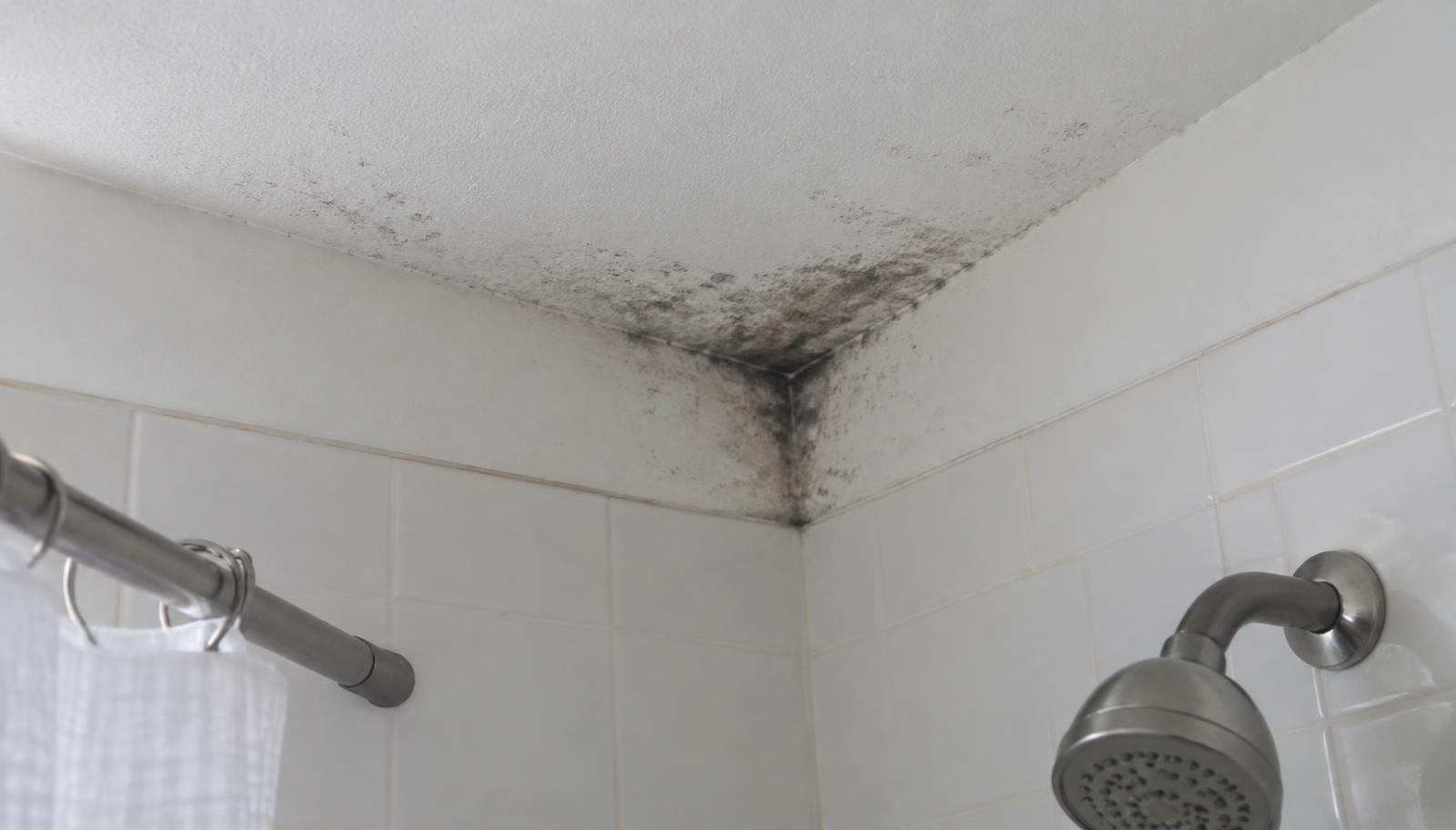
- Bathrooms without a working exhaust fan, especially ceilings above showers and the area behind the toilet.
- Under kitchen and bathroom sinks, where slow drips from supply lines or drains can go unnoticed for years.
- Behind the refrigerator, dishwasher and washing machine, anywhere a water line runs.
- Window sills and frames, particularly single-pane windows on the foggy or north side of the home.
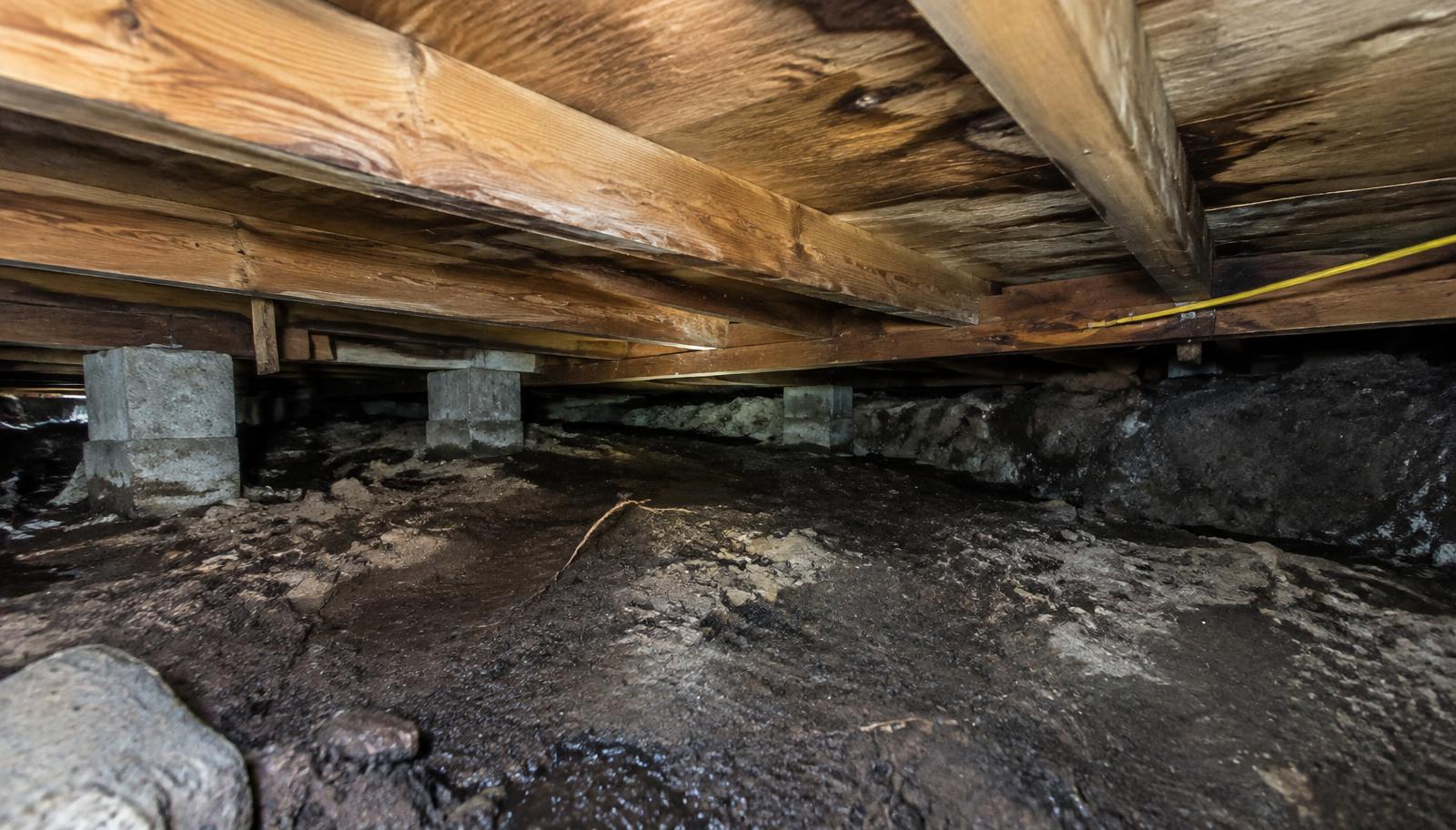
- Crawlspaces, especially on hillside lots where rain runs under the house.
- Garages and basement rooms below living space, where concrete walls can wick in moisture.
- Attics, where roof leaks or poorly vented bathroom fans can dampen the underside of the roof deck.
- HVAC systems and ducts, where condensation and dust can combine.
Can you see or smell mold spores?
Individual spores are invisible. What you can notice are the signs that mold is growing somewhere nearby. The most common is smell. Growing mold releases compounds that give off a musty, earthy odor, often compared to wet cardboard, an old basement or damp socks. If a room smells like that and you can't find the source, it's worth investigating.
Visible signs include dark spotting on grout, ceilings or window frames, fuzzy growth on stored items, staining or bubbling paint, and warped baseboards or flooring. Condensation that forms on windows every morning is not mold, but it is a sign of high indoor humidity, which is the condition mold needs.
Do DIY mold spore test kits work?
Most hardware-store kits are settle plates: a small dish of growth medium that you leave open for an hour or two. Because spores are present in essentially all air, these plates almost always grow something. The kit can't tell you how much air was sampled, how the result compares to outdoor air, or whether the spores came from inside your home or through an open door.
Some kits offer lab analysis for an extra fee, which is an improvement, but without a measured air volume and an outdoor control, the numbers are still hard to interpret. Most importantly, a kit can't look for the moisture source. Even a perfect lab result doesn't tell you which wall is wet.
Consumer air monitors are useful for other reasons. A $15 to $30 hygrometer is one of the best tools a homeowner can own, because it tracks humidity, the condition that matters most. But monitors don't count or identify mold spores.
How professional mold spore testing works
Professional air sampling uses a calibrated pump that pulls a known volume of air, often 75 to 150 liters, through a small spore-trap cassette. Inside the cassette, spores and particles stick to a sticky slide. Samples are usually taken in the rooms of concern and at least once outdoors as a control. The cassettes are sealed, labeled and sent to an independent laboratory with a chain-of-custody form.
At the lab, an analyst examines the slide under a microscope, counts the spores and identifies them by type. The result is reported as spores per cubic meter of air for each type, alongside the outdoor control. Surface samples, taken with a swab or tape lift, can identify what's growing on a specific visible spot.
Testing is only half of a good visit. The other half is the inspection: moisture meters on walls and floors, thermal imaging to spot cool, damp areas behind surfaces, room-by-room humidity readings and a careful look at plumbing, windows, crawlspaces and attics. Air results tell you whether something is off; the inspection helps show where and why.

How to read a mold spore report
A typical report shows a table with one column per sample location and rows for each spore type. Here's how to approach it without getting lost in the numbers.
- Start with the outdoor sample. That's your baseline for that day and season.
- Compare the total indoor count with outdoor. Indoor totals that are similar or lower are generally expected. Noticeably higher indoor totals suggest an indoor source.
- Compare the mix. If indoor air is dominated by a type that's rare outside, that's worth attention even if totals are modest.
- Look for water-damage indicators such as Stachybotrys or Chaetomium. Even low counts can be meaningful when paired with moisture readings.
- Read the inspector's notes. Numbers mean more when they're tied to what was seen and measured in each room.
You can't remove every spore from a home. You can take away the moisture they need.
AirCare 365 · Bay Area
Want real numbers for your home?
Inspection, lab-analyzed air samples and a digital report. $520 online, $0 today.
Spores, health and what testing can't tell you
Public health agencies, including the CDC and the California Department of Public Health, note that some people are sensitive to mold and that dampness and mold in homes are associated with respiratory symptoms for some people. Sensitivity varies widely. There are no federal limits for indoor mold spore levels, and an air test can't diagnose a health condition.
No test can prove a home is 'mold free' either, because spores are always present in air. What testing does well is document conditions at a point in time so you, your contractor and, if needed, your doctor can make informed decisions. If you have health concerns, please talk with a medical professional.
What to do if your home has elevated spores
The steps are the same whether the result came from a test or from a musty smell you can't ignore:
- Find and fix the moisture source first. Cleaning mold without fixing water means it comes back.
- Lower indoor humidity to about 30% to 50%. Run bathroom and kitchen fans, and use a dehumidifier in damp rooms.
- For small areas of visible growth on hard surfaces (under about 10 square feet), the EPA says many homeowners can clean it themselves with detergent and water while wearing gloves and an N95 mask.
- For larger areas, growth inside walls or HVAC systems, or after sewage or flood water, the EPA recommends professional remediation.
- After remediation, clearance testing by a company that didn't do the removal is a good way to confirm the work.
How to keep spore levels down year-round
You can't keep spores out of a home, but you can keep them from finding a place to grow. These habits make the biggest difference in Bay Area homes:
- Keep a hygrometer in the dampest room and aim for 30% to 50% relative humidity.
- Run bathroom fans during every shower and for at least 20 minutes after.
- Clean gutters and check downspouts before the rainy season, and make sure water drains away from the foundation.
- Look under sinks and behind appliances a few times a year for drips.
- Wipe window condensation in the morning and open windows briefly after cooking.
- Check the crawlspace after big storms for standing water.
- Replace HVAC filters on schedule and keep supply vents clear of dust.
- Consider seasonal monitoring, before and after the rainy season, to catch changes early.
Mold spores through the Bay Area seasons
Outdoor spore levels change with the seasons, and that affects what an indoor test shows. In the Bay Area, outdoor counts often rise after the first autumn rains, when mushrooms and plant material release basidiospores and ascospores in large numbers. They can stay elevated through the wet months and drop again during dry, warm stretches. Near the coast, fog can keep outdoor levels moderate for much of the summer.
That's why an outdoor control sample taken on the same day matters so much. An indoor count that looks high in isolation may be perfectly ordinary for a rainy November day, and a modest count can stand out in a dry September. Good inspectors also note the weather, whether windows were open and whether anyone was cleaning or vacuuming before sampling, because all of these can shift results.
Seasonal testing, once before the rainy season and once after, is one of the clearest ways to see whether a home's moisture situation is stable. The comparison between visits often tells you more than any single number.
Mold spores and your HVAC system
Forced-air heating and cooling systems move a lot of air, and with it, spores and dust. Most of the time this just redistributes what's already in the home. But when an air handler, drain pan or duct run stays damp, from condensation, a clogged drain line or a duct running through a wet crawlspace, the system itself can become a place where mold grows.
Signs worth checking include a musty smell that gets stronger when the system turns on, visible dust or dark staining around supply registers, and water around the furnace or air handler. Changing filters on schedule, keeping the condensate drain clear and making sure ducts in crawlspaces and attics are sealed and insulated all help. If an inspection suggests the HVAC system is involved, a qualified HVAC contractor can inspect and clean the components.
- Replace filters every 1 to 3 months, or as the manufacturer recommends.
- Use the highest MERV rating your system is designed for.
- Keep the area around the furnace or air handler dry and uncluttered.
- Have ducts in crawlspaces inspected after major storms.
Common myths about mold spores
Because mold is talked about so much, a lot of confusing advice circulates. Here are the misconceptions inspectors hear most often:
- Myth: bleach kills mold for good. Bleach can remove surface staining on hard, non-porous surfaces, but it doesn't fix the moisture that allowed growth, and it doesn't penetrate porous materials like drywall and wood well.
- Myth: if you can't see mold, you don't have a problem. Growth can hide inside walls, under flooring and in crawlspaces. A musty smell is often the first clue.
- Myth: all black mold is 'toxic black mold'. Many different molds look dark. Color alone doesn't identify a type; a lab does.
- Myth: one air test proves a home is safe. No test can prove that, because spores are always present in air. Testing documents conditions at a point in time.
- Myth: painting over mold solves it. Paint hides staining briefly, but growth continues underneath if the area stays damp.
Bay Area mold spore testing with AirCare 365
AirCare 365 inspects and tests homes in all nine Bay Area counties. Every AirCheck visit includes a visual inspection, moisture and humidity readings, thermal imaging, indoor and outdoor air sampling, independent laboratory analysis and a digital report saved to your Home Air Health Record. We don't perform remediation, so our findings aren't tied to selling removal work.
An AirCheck is $595 list, or $520 when you book online. You pay $0 today: your card is saved and only charged when the visit happens. For homes that benefit from seasonal checks, AirCare 365 includes two visits a year at $437.50 each, and Premium includes four visits at $405 each, charged per visit with no commitment.
Not sure yet? Take the free 60-second Home Mold & Air Risk Check to see which factors are worth checking in your home.
Frequently asked questions
Are mold spores harmful?+
Public health agencies note that some people are sensitive to mold and may have symptoms such as a stuffy nose, wheezing or itchy eyes. Sensitivity varies. Only a medical professional can advise on health concerns.
What is a normal mold spore count indoors?+
There's no official federal limit. Professionals compare indoor samples with an outdoor control taken the same day. Indoor levels similar to or lower than outdoors, with a similar mix of types, are generally expected.
How long do mold spores stay in the air?+
Small spores can stay airborne for hours and are stirred up by movement, vacuuming and HVAC airflow. Heavier, sticky spores like Stachybotrys settle quickly, which is why they're less common in air samples.
Can air purifiers remove mold spores?+
HEPA air purifiers can reduce airborne spores in a room, but they don't stop mold growing on a damp surface. Fixing the moisture source is still the key step.
Do mold spores die when dry?+
Many spores become dormant rather than dying. They can grow again if the area gets wet, which is why moisture control matters more than killing spores.
How much does mold spore testing cost in the Bay Area?+
With AirCare 365, an AirCheck with indoor and outdoor air sampling, lab analysis and an inspection is $520 online (list $595), with $0 due today.
Want measured information about your home?
AirCare 365 provides mold air sampling and mold and indoor air quality testing across the Bay Area.
Sources
Serving San Francisco, San Mateo, Menlo Park, San Jose, Sunnyvale, Palo Alto, Oakland, Fremont and the rest of the Bay Area.