Quick answer
Healthcare buildings follow detailed environmental infection-control guidance, and moisture control is a recurring theme in it. Most hospitals rely on in-house facilities teams and certified industrial hygienists. Smaller clinics, medical offices and outpatient suites often have less support. This guide summarizes the basics and explains where independent inspection and documentation can help. AirCare 365 serves small clinics and medical offices by quote; we don't provide infection-control, hospital compliance or medical services.
Key takeaways
- CDC environmental infection-control guidance for healthcare facilities emphasizes preventing water intrusion and responding quickly to leaks.
- Hospitals typically use certified industrial hygienists and infection-prevention teams for sampling tied to patient care.
- Smaller clinics, dental and medical offices often benefit from a simple moisture routine and periodic independent checks.
- Document leaks, drying and repairs — the paper trail matters.
- AirCare 365 provides inspection and sampling for small Bay Area clinics and offices by quote.
This guide is general information, not medical advice. If you have health concerns, please consult a medical professional.
Why moisture matters in healthcare buildings
Healthcare buildings run plumbing, sterilization equipment, HVAC and cleaning routines intensively. Water leaks, condensation and damp building materials are an ongoing maintenance reality. The CDC's Guidelines for Environmental Infection Control in Health-Care Facilities treat water intrusion and damp materials as issues to address promptly, particularly during construction and renovation.
Large hospitals have infection-prevention departments, engineering staff and industrial hygienists who follow those guidelines. Smaller facilities — a two-suite medical office in Palo Alto, a dental practice in Walnut Creek, a physical therapy clinic in San Rafael — usually rely on a landlord, a general contractor and whoever notices a stain.
This guide is for that second group.
Who should handle what
It helps to be clear about roles:
- Infection prevention and clinical decisions: your clinical leadership and, where relevant, infection-prevention consultants.
- Sampling tied to patient-care areas in hospitals or surgical settings: certified industrial hygienists following your facility's program.
- Building repairs and remediation: licensed contractors.
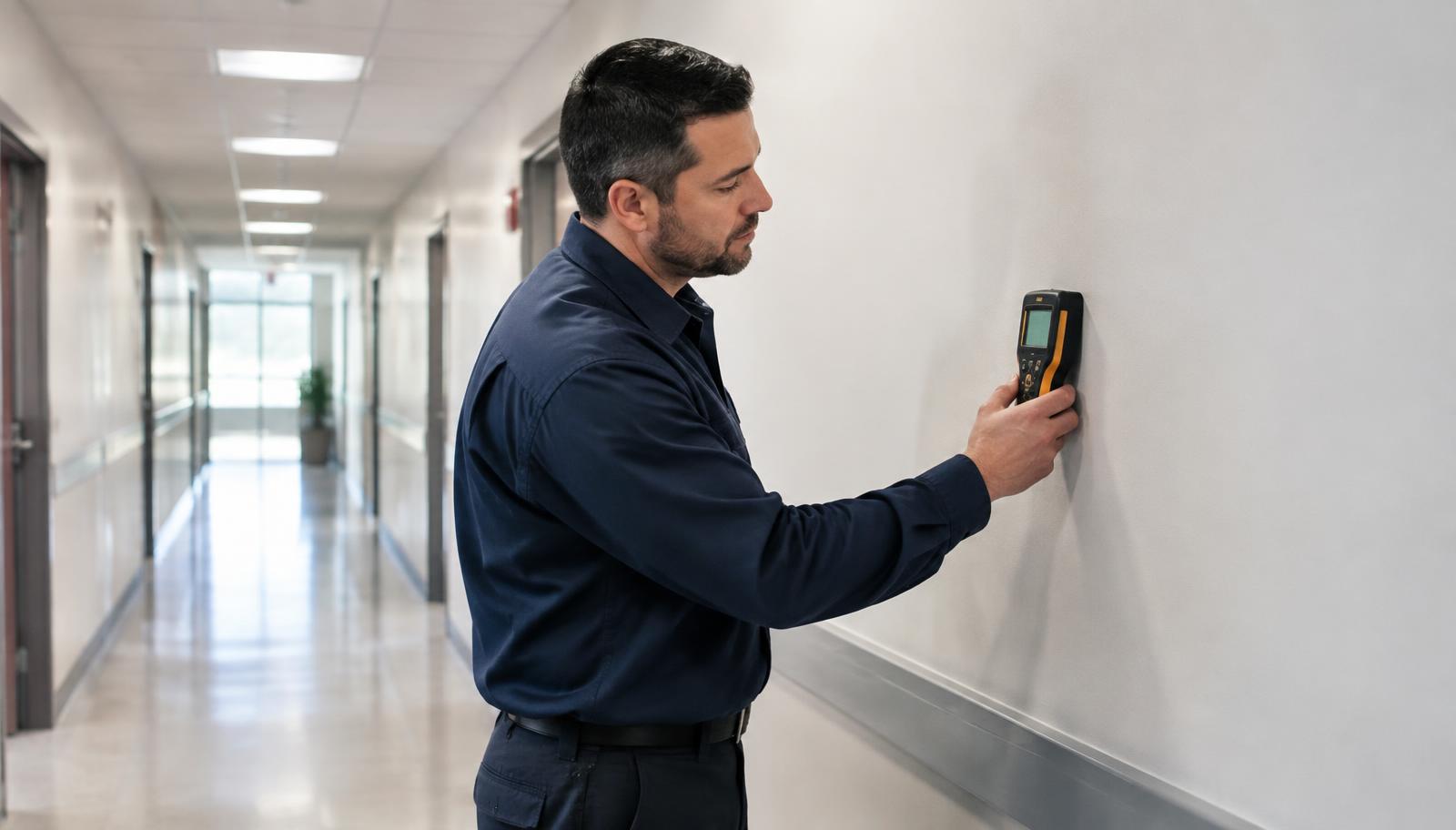
- Routine moisture checks, documentation after leaks and general indoor air sampling in offices and small clinics: this is where independent inspectors like AirCare 365 can help.
A simple moisture routine for small clinics
Most problems are caught early with a monthly walk-through:
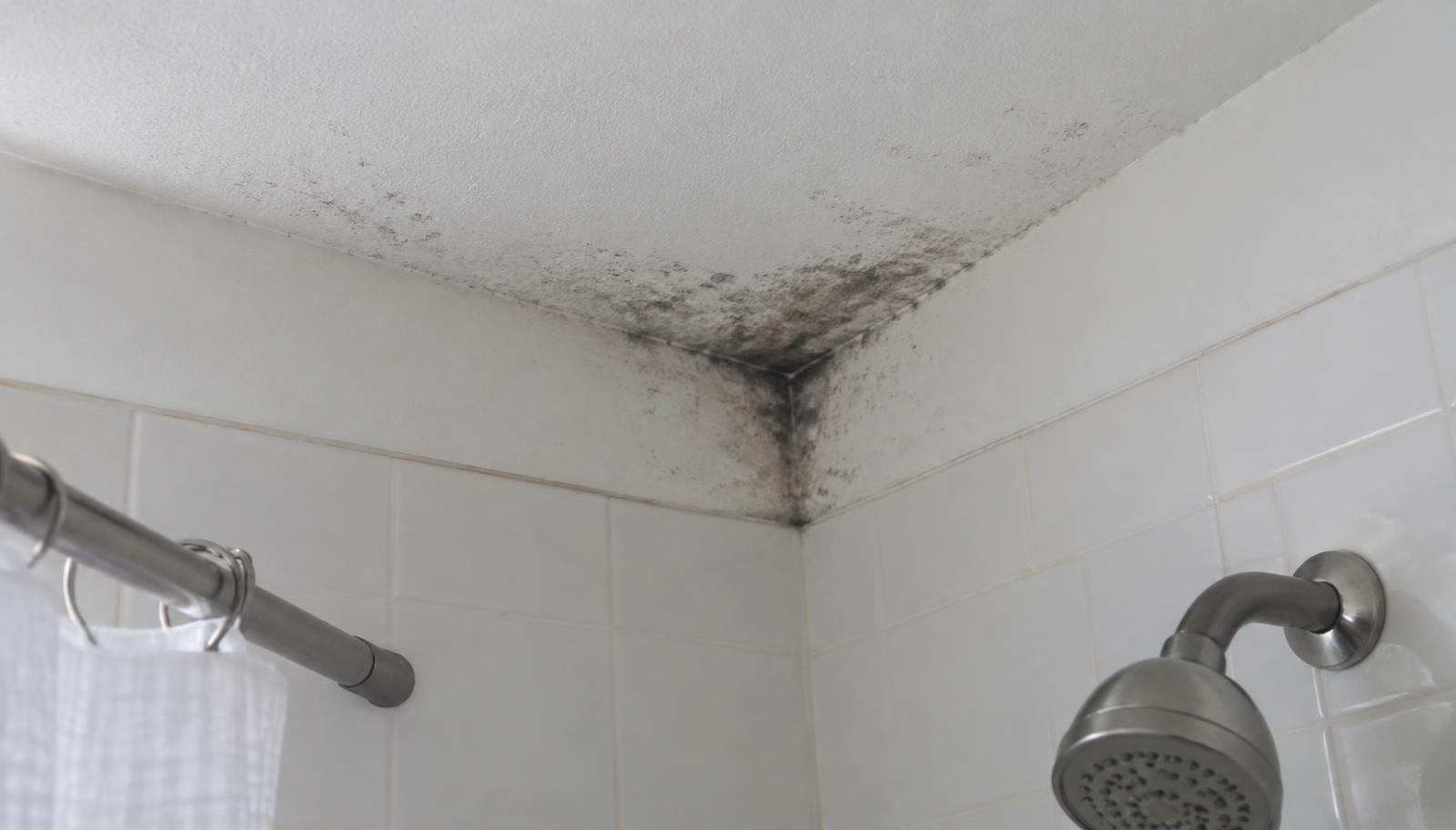
- Ceiling tiles: replace stained tiles and find the source above them.
- Sinks, sterilizer and dishwasher connections: dry cabinets, no drips.
- Restrooms: exhaust fans working, caulk intact.
- HVAC: condensate lines draining; filters on schedule; no damp duct insulation.
- Windows and exterior walls: condensation or staining after storms.
- Storage: supplies off the floor and away from exterior walls.
After a leak: document the whole arc
When water gets in, a clear paper trail protects everyone: the date and source, what got wet, who dried it and how, and a check once drying is complete. EPA guidance for commercial buildings notes that wet materials should be dried within 24–48 hours.
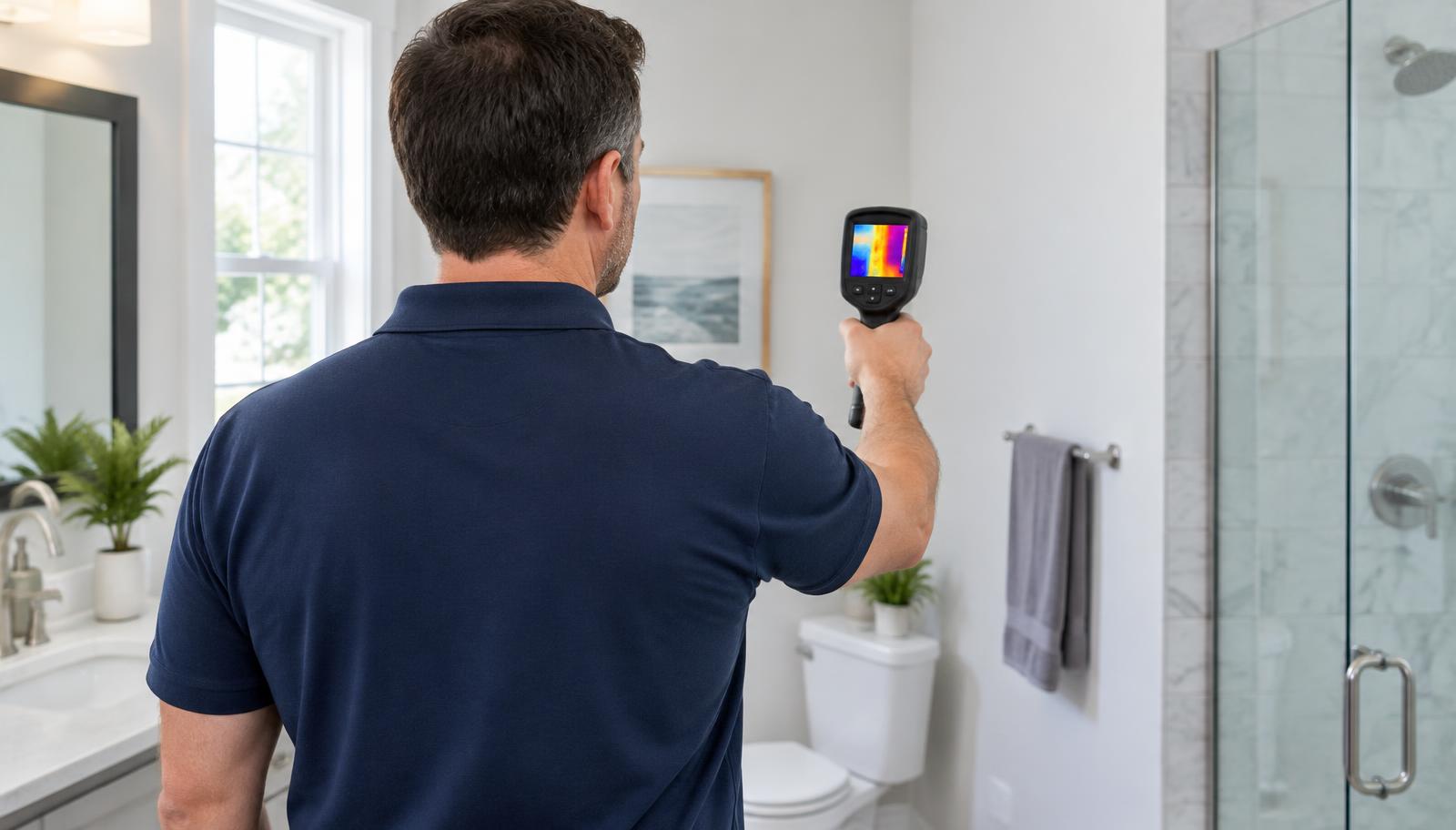
An independent post-drying check — moisture readings, thermal imaging and, where appropriate, air samples compared with an outdoor control — adds a neutral record to your file. Because we don't perform remediation, the findings aren't tied to selling work.
Five steps from question to answer
- 1
Inspect
Room-by-room visual check
- 2
Measure
Moisture, humidity, thermal
- 3
Sample
Indoor + outdoor air
- 4
Lab
Independent analysis
- 5
Report
Clear next steps
The paper trail after a leak protects everyone.
AirCare 365 · Bay Area
Want real numbers for your home?
Inspection, lab-analyzed air samples and a digital report. $520 online, $0 today.
An example from a medical office
Small offices often discover water issues through staff or patients.
What we provide — and don't
For small clinics and medical offices, AirCare 365 offers visual inspection, moisture and humidity readings, thermal imaging, air and surface sampling with independent lab analysis, and a written report.
We don't provide infection-control programs, hospital or surgical-suite sampling, regulatory compliance, or medical advice. For those needs, work with your infection-prevention team and a certified industrial hygienist. Request a quote with your address, suite size and what prompted the request.

Frequently asked questions
Do you test hospitals?+
We focus on small clinics, medical and dental offices. Hospitals and surgical settings typically use certified industrial hygienists under their infection-prevention programs.
Is your report an infection-control or compliance document?+
No. It documents building conditions. It doesn't replace any program your facility is required to follow.
When should a clinic call for an independent check?+
After leaks once drying is done, before and after renovations, when staff notice a musty smell, or as a periodic baseline.
How is pricing set?+
By quote, based on size, number of rooms and sampling needs. We confirm scope and price before scheduling.
Want measured information about your home?
AirCare 365 provides moisture and mold and indoor air quality testing across the Bay Area.
Sources
Serving San Francisco, San Mateo, Menlo Park, San Jose, Sunnyvale, Palo Alto, Oakland, Fremont and the rest of the Bay Area.
Related guides
- Mold Allergy Symptoms at Home: What to Notice, What It Might Mean, and When to Test
- Mold, Kids and Allergies: Why Bay Area Families Test 2–4 Times a Year
- Senior Home Living: Indoor Air and Mold Checks for Aging Parents in the Bay Area
- Assisted Living and Senior Care Facilities: An Indoor Air and Moisture Checklist