This guide is general information, not medical advice. If you have health concerns, please consult a medical professional.
How to test air quality at home
Consumer monitors commonly measure particulate matter (PM2.5), carbon dioxide, temperature, humidity and sometimes total VOCs. They're useful for spotting trends — for example, rising PM2.5 during wildfire smoke or high CO2 in a closed bedroom.
A basic hygrometer is an inexpensive way to track humidity, a key factor for mold.
Consumer monitor vs professional test
Home monitor
- Good for trends over time
- Accuracy varies
- Can't identify mold types
- No inspector interpretation
Professional test
- Calibrated equipment
- Lab analysis
- Inspector finds sources
- Report with next steps
Where consumer monitors fall short
Sensors vary in accuracy and usually don't identify specific compounds or mold. They also can't tell you where moisture is building up.
Carbon monoxide and radon need dedicated detectors or tests.
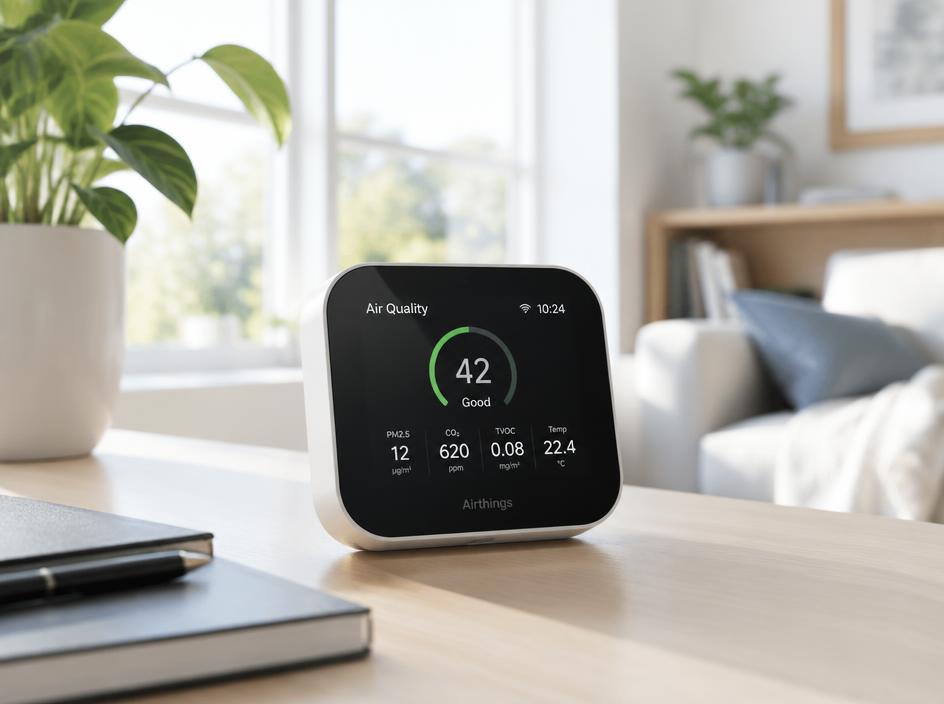
Aim for 30–50% relative humidity
The U.S. EPA recommends keeping indoor humidity below 60%, ideally 30–50%.
A monitor tells you something changed. A professional test tells you why.
AirCare 365 · Bay Area
Want real numbers for your home?
Inspection, lab-analyzed air samples and a digital report. $520 online, $0 today.
When professional testing helps
If you notice persistent odors, have had water damage, are sensitive to indoor conditions or just moved in, professional testing adds lab analysis and an inspector's interpretation.
AirCare 365 visits include humidity and temperature readings and mold air sampling, with VOC, allergen and particulate testing available as add-ons.
Want measured information about your home?
AirCare 365 provides indoor air quality and mold and indoor air quality testing across the Bay Area.
Sources
Serving San Francisco, San Mateo, Menlo Park, San Jose, Sunnyvale, Palo Alto, Oakland, Fremont and the rest of the Bay Area.