Quick answer
Indoor air quality testing measures what's in the air you breathe at home: humidity, particles, carbon dioxide, chemical vapors (VOCs), mold spores and, separately, radon. A $100-$250 home monitor is great for tracking trends like humidity and CO2. A professional visit adds calibrated equipment, lab analysis, an outdoor comparison and, most importantly, someone who finds the source. Start with the question you're trying to answer, then pick the test that answers it.
Key takeaways
- The EPA notes that indoor levels of some pollutants can be 2 to 5 times higher than typical outdoor levels.
- Humidity is the single most useful number: aim for 30-50%, and stay below 60%.
- Consumer monitors are good at trends (humidity, CO2, particles) and weak at identifying mold or specific chemicals.
- Mold air testing only means something when indoor samples are compared with an outdoor control and analyzed by a lab.
- Radon needs its own test. It's odorless and isn't picked up by general air monitors.
- A good test ends with a source and a plan, not just a number.
This guide is general information, not medical advice. If you have health concerns, please consult a medical professional.
What indoor air quality testing actually is
Indoor air quality (IAQ) testing is a set of measurements that describe the air inside a home at a point in time or over a period. The phrase covers everything from a $15 humidity gauge to a multi-hour professional visit with lab analysis, which is why people are often confused about what they're buying.
The U.S. Environmental Protection Agency says Americans spend about 90% of their time indoors, and that indoor concentrations of some pollutants are often 2 to 5 times higher than typical outdoor levels. That doesn't mean every home has a problem. It means the air inside is worth understanding, especially if something has changed: a leak, a remodel, new furniture, a new baby, a smell that won't go away, or wildfire smoke outside.
Good testing starts with a question. "Is something wrong with my air?" is too vague to test. "Why does the downstairs bedroom smell musty after rain?" or "Did our remodel leave chemical fumes behind?" are questions a test can answer.
The six things worth measuring
Most homes only need a handful of measurements. Here is what each one tells you:
- Relative humidity: the most important single number for mold and dust mites. The EPA suggests keeping indoor humidity below 60%, ideally 30-50%.
- Carbon dioxide (CO2): a proxy for ventilation. Levels that climb well above outdoor air overnight in a closed bedroom suggest the room isn't getting much fresh air.
- Particulate matter (PM2.5): fine particles from cooking, candles, wildfire smoke and traffic. This is the number to watch during smoke events.
- Volatile organic compounds (VOCs): vapors from paints, finishes, cleaners, new furniture and flooring. Monitors report a total, while lab tests can identify specific compounds.
- Mold spores: counted and identified by a lab from air samples, compared with an outdoor control taken the same day.
- Radon: a naturally occurring radioactive gas from soil. It needs its own dedicated test and is common in some regions.
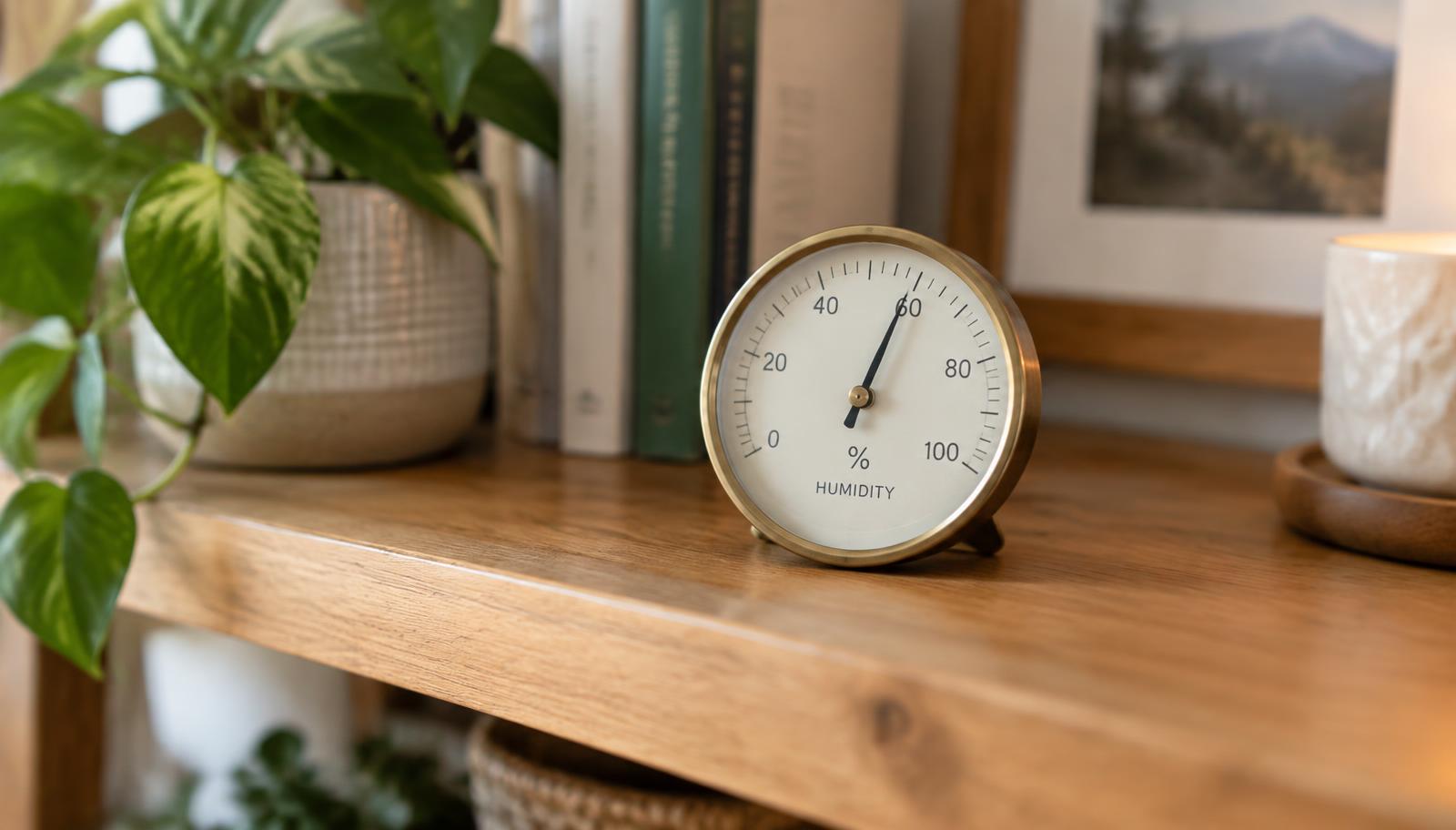
Aim for 30–50% relative humidity
The U.S. EPA recommends keeping indoor humidity below 60%, ideally 30–50%.
What the numbers mean
Numbers without context cause more worry than they solve. A few rules of thumb help:
Humidity readings that sit above 60% for days at a time give mold and dust mites what they need. Readings below 30% can feel dry and uncomfortable. A room that runs consistently higher than the rest of the house is a clue, and that's often a bathroom without a working fan, a basement or crawlspace, or a wall with a hidden leak.
CO2 is best read as a trend. Outdoor air is roughly 420 ppm. If a closed bedroom climbs far above that overnight, opening a window or running ventilation usually brings it down. It's a ventilation signal, not a toxin reading at typical home levels.
PM2.5 spikes during cooking and candles are normal and should fall within an hour with ventilation. Levels that stay elevated, or climb during wildfire smoke, are a reason to run filtration.
Mold spore counts only mean something relative to outdoor air. Indoor counts that are similar to or lower than outdoors, with a similar mix of types, are typical. Indoor counts that are higher, or dominated by types that are uncommon outside, suggest an indoor source worth finding.
DIY monitors vs professional testing
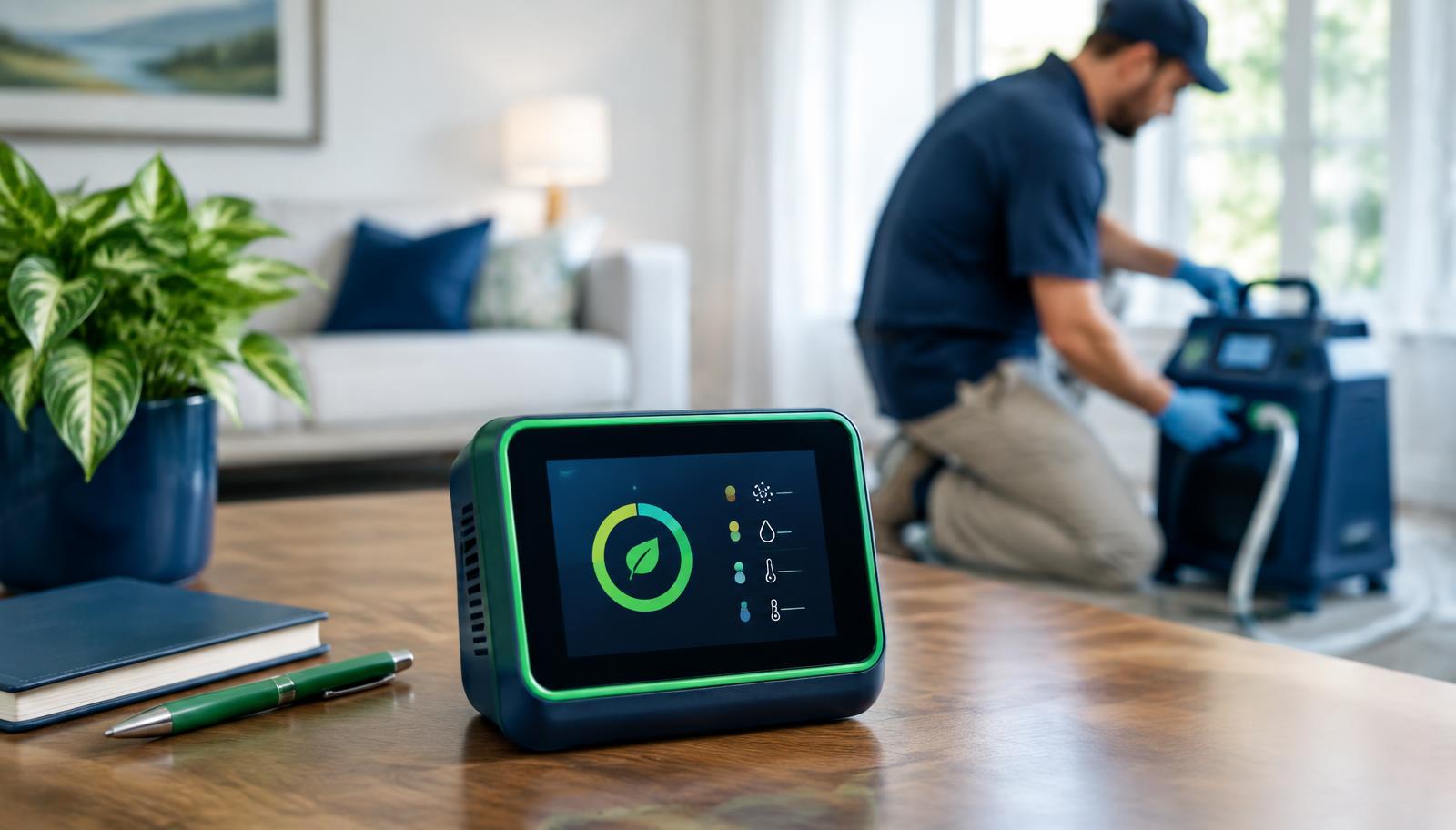
Consumer air monitors have become genuinely useful. A good one tracks humidity, temperature, CO2, particles and total VOCs continuously and shows you trends on your phone. For most families that's the right first step.
Where monitors fall short is identification and diagnosis. They can't tell you which mold types are present, which specific chemical is behind a VOC spike, or where moisture is coming from. DIY mold "test kits" (settle plates) are even less reliable: spores are in all air, so a plate left open almost always grows something.
A professional visit adds calibrated sampling pumps, a same-day outdoor control, independent lab analysis, moisture meters and thermal imaging. Most importantly, it adds a person whose job is to connect the numbers to a cause.
Home monitor vs professional testing
Home monitor
- $100-$250 one time
- Tracks humidity, CO2, particles and total VOCs over weeks
- Can't identify mold types or specific chemicals
- No one to find the source
Professional visit
- Calibrated equipment and lab analysis
- Indoor vs outdoor comparison
- Moisture mapping and thermal imaging
- A written report with next steps
When professional testing makes sense
These are the situations where homeowners most often get value from a professional visit:
- A musty smell with no visible source.
- After a leak, flood or roof problem, to check whether moisture spread.
- Before buying a home, especially older homes or ones with past water damage.
- After mold removal, to confirm conditions (clearance testing by someone independent of the remediator).
- When a remodel or new flooring left a lingering chemical smell.
- When someone in the home is sensitive and the family wants measured facts to share with their doctor.
- Ongoing checks two to four times a year for households that want to track seasonal changes.
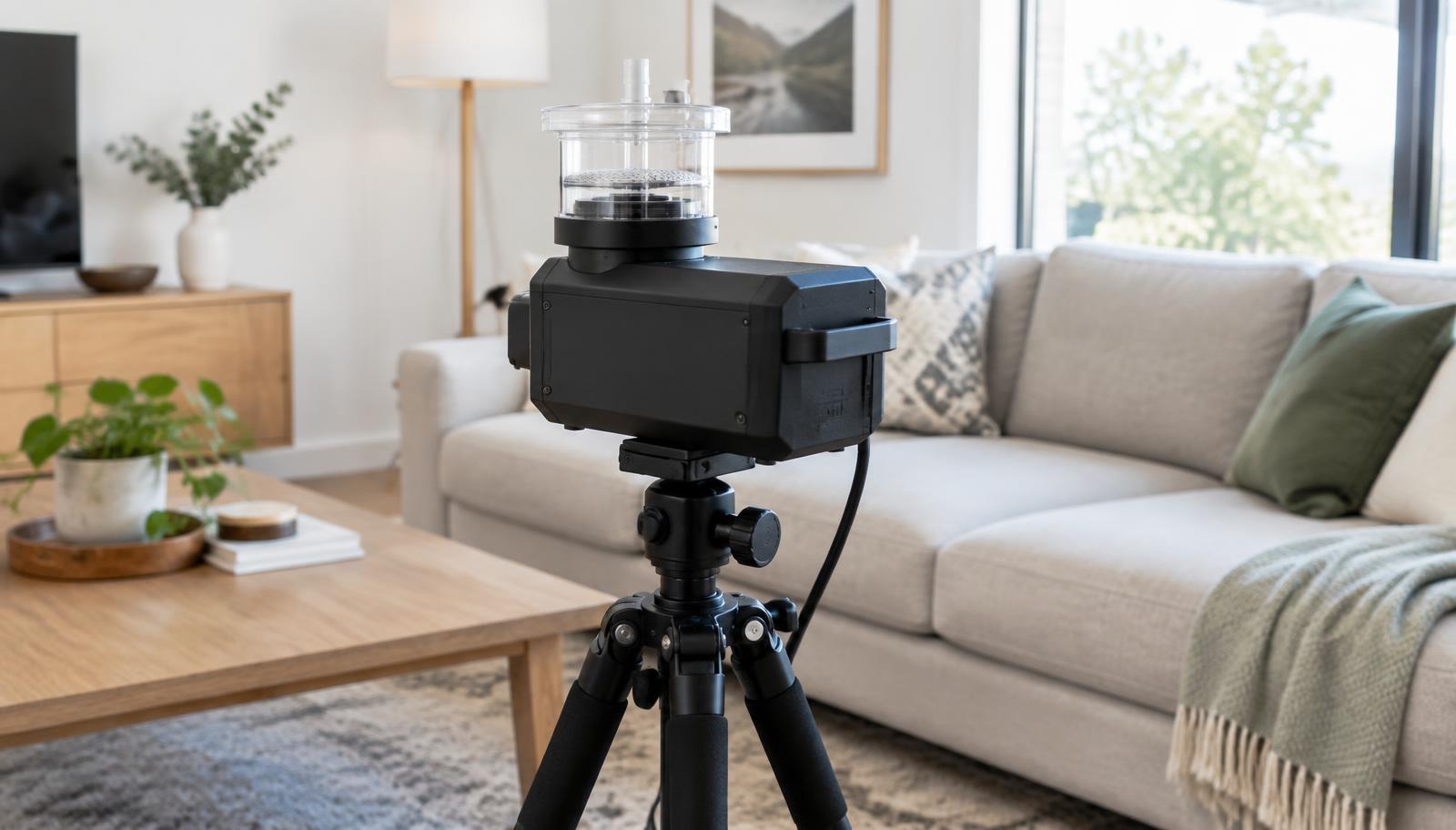
The goal of testing isn't a scary number. It's finding the source and knowing what to do about it.
AirCare 365 · Bay Area
Want real numbers for your home?
Inspection, lab-analyzed air samples and a digital report. $520 online, $0 today.
What happens during a professional IAQ visit
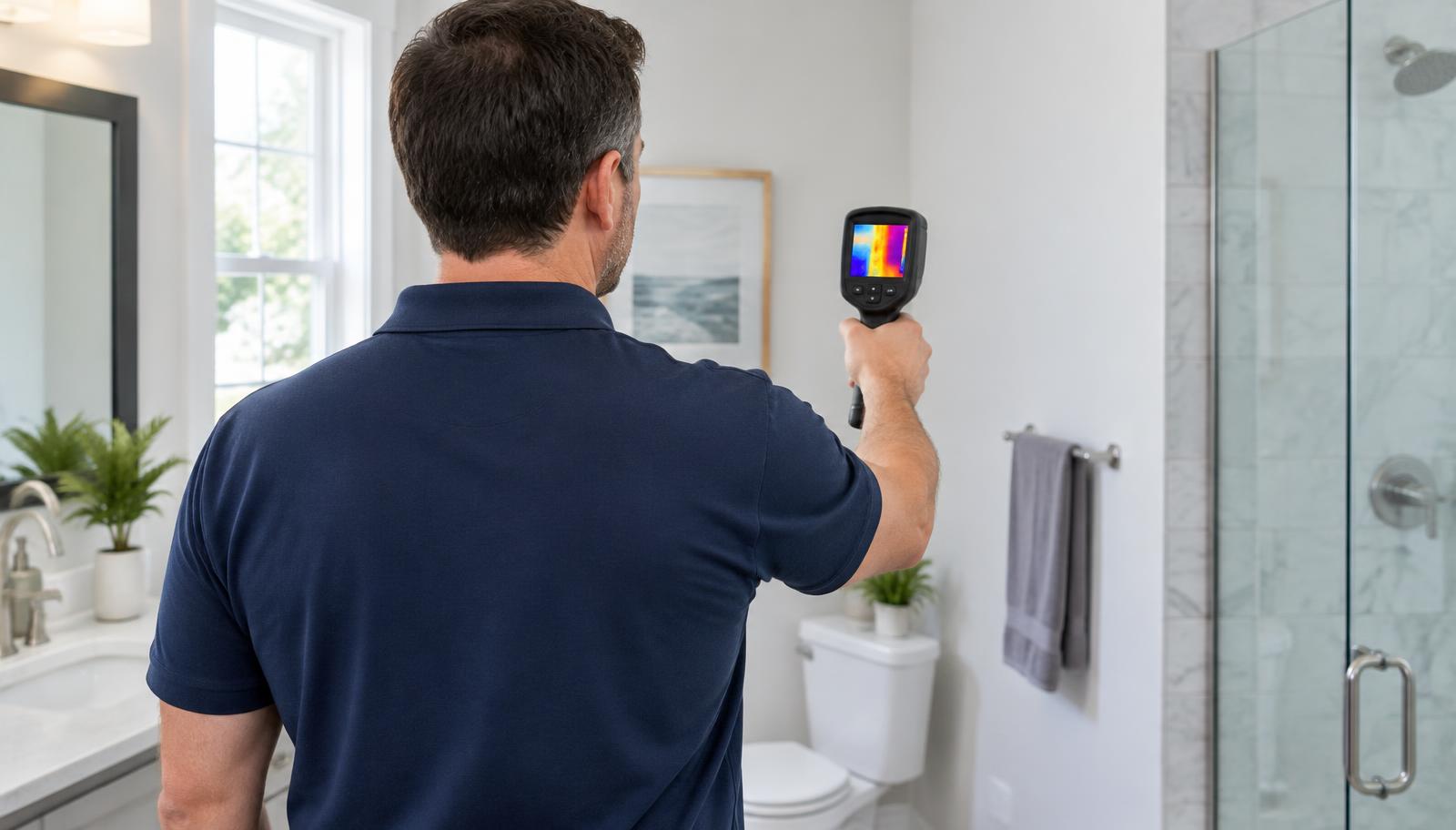
A typical visit takes 1.5 to 3 hours. The inspector walks the home inside and out, asks about history (leaks, remodels, smells, who lives there), takes room-by-room humidity and temperature readings and checks walls, floors and cabinets with a moisture meter. Thermal imaging highlights cool, damp areas behind surfaces, which are then confirmed with a meter.
Air samples are collected indoors in the rooms of concern and outdoors as a control. Samples go to an independent laboratory, and results usually come back within a few business days. The report should include photos, readings, lab results and plain-language next steps.
How much indoor air quality testing costs
Nationally, a basic professional visit with a small number of air samples is commonly quoted somewhere between a few hundred dollars and around $1,000, depending on home size, the number of samples and whether VOC or other lab panels are added. Extra samples are often priced individually.
In California, AirCare 365 charges $595 for an AirCheck ($520 online), which includes the inspection, moisture mapping, thermal imaging, indoor and outdoor air samples, lab analysis and a digital report. Ongoing plans run $950 per year for two visits or $1,695 for four. AirCare 365 books visits across the 9 Bay Area counties today and is opening in Los Angeles, Orange County, San Diego and Sacramento next, with the same prices statewide.
Five steps from question to answer
- 1
Inspect
Room-by-room visual check
- 2
Measure
Moisture, humidity, thermal
- 3
Sample
Indoor + outdoor air
- 4
Lab
Independent analysis
- 5
Report
Clear next steps
Acting on your results
The best reports end with a short list: what was found, the likely source, and what to do first. In most homes, the fixes are unglamorous: repair the leak, run the bathroom fan longer, add a dehumidifier to the lowest level, upgrade the HVAC filter to MERV 13 if the system can handle it, and ventilate after cooking and cleaning.
Be wary of anyone who uses a test to sell you an expensive fix on the spot. Independent testing, meaning the tester doesn't sell remediation or equipment, keeps the advice honest. And remember that no test can prove a home is "mold free" or "healthy". It can only describe what was measured on the day.
Frequently asked questions
What is the best way to test indoor air quality at home?+
Start with a consumer monitor that tracks humidity, CO2, PM2.5 and total VOCs for a few weeks. If you have a specific concern such as a musty smell, a leak or a remodel, add a professional visit with lab analysis and an outdoor comparison.
How much does indoor air quality testing cost?+
National quotes commonly range from a few hundred dollars to about $1,000 depending on home size and lab panels. AirCare 365 charges $595 ($520 online) in California.
Do air quality monitors detect mold?+
No. Monitors can show humidity that favors mold, but identifying mold requires air or surface samples analyzed by a laboratory.
What is a good indoor humidity level?+
The EPA suggests keeping indoor relative humidity below 60%, ideally between 30% and 50%.
Does indoor air quality testing include radon?+
Usually not. Radon needs a dedicated short- or long-term test. The EPA recommends testing, especially in lower levels of the home.
Want measured information about your home?
AirCare 365 provides indoor air quality and mold and indoor air quality testing across the Bay Area.
Sources
Serving San Francisco, San Mateo, Menlo Park, San Jose, Sunnyvale, Palo Alto, Oakland, Fremont and the rest of the Bay Area.