
Quick answer
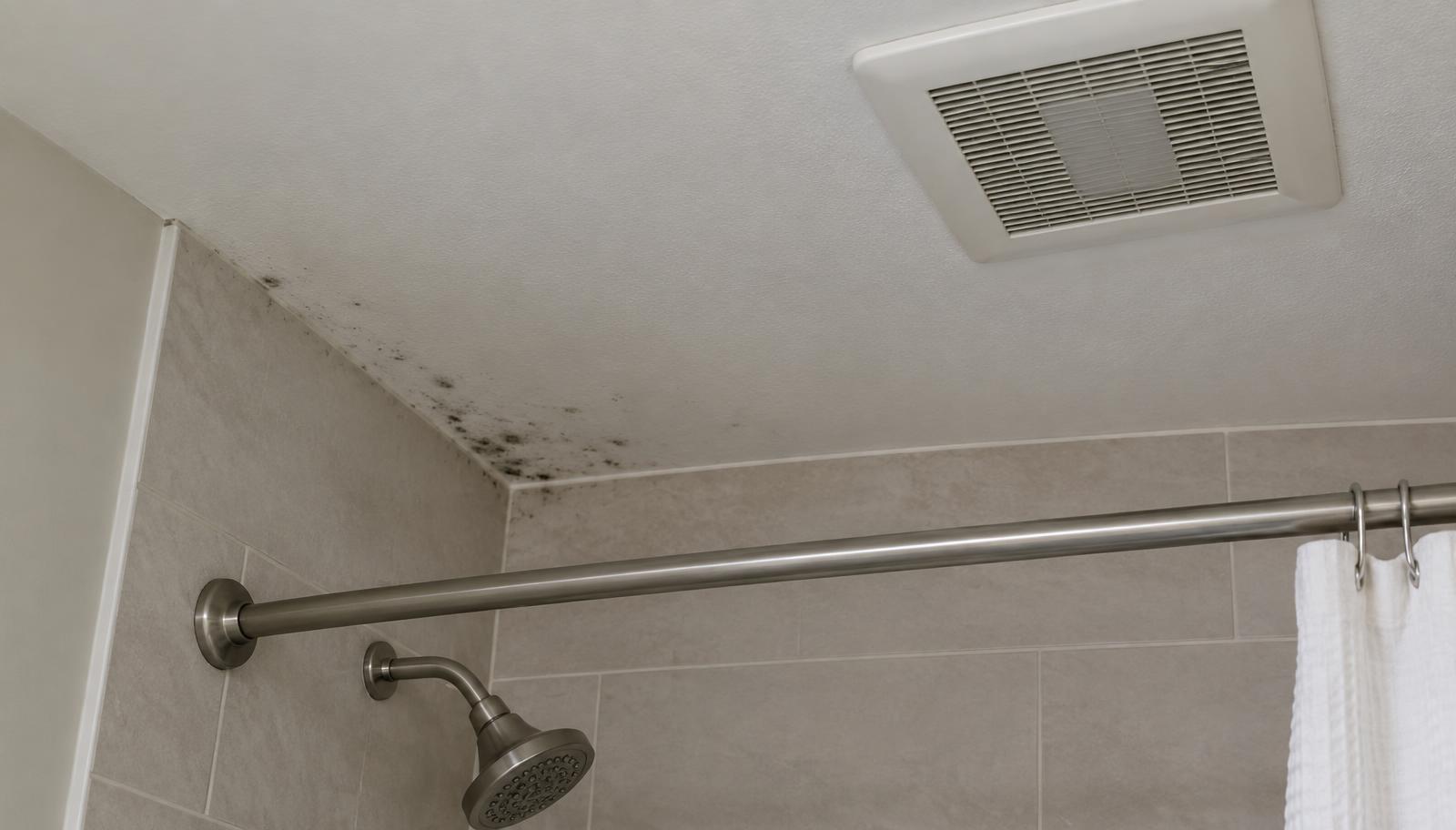
Spots on a bathroom ceiling are usually surface growth from shower steam that isn't vented well enough. Small areas (under about 10 square feet) can usually be cleaned with detergent and water following EPA guidance. The real fix is moisture: a fan that actually vents outside, run for 20-30 minutes after showers. If spots return quickly, grow in one patch, or sit under another bathroom or the roof, suspect a leak and get it checked.
Key takeaways
- Most bathroom ceiling mold comes from condensation, not a leak.
- The EPA says areas under about 10 square feet can usually be cleaned by the homeowner.
- Clean with detergent and water, dry fully, and don't just paint over it.
- Run the exhaust fan during and 20-30 minutes after showers, and make sure it vents outdoors.
- Stains that return in the same spot, or sit below a toilet, tub or roof, point to a leak.
- Mold-resistant paint helps only after the moisture problem is solved.
This guide is general information, not medical advice. If you have health concerns, please consult a medical professional.
Why bathroom ceilings grow mold
A hot shower can push bathroom humidity close to 100% in minutes. Warm, moist air rises and meets the cooler ceiling, where it condenses into a thin film of water. Soap residue and dust give mold something to feed on. Do that every day and the ceiling above the shower stays damp long enough for growth to start.
That's why bathroom ceiling mold is so common and so persistent: it isn't a one-time event. It's a daily cycle of wetting and slow drying.
What causes it: the usual suspects
- No exhaust fan, or a fan that's too small for the room.
- A fan that vents into the attic instead of outdoors, moving the problem upstairs.
- Fans switched off right after the shower ends.
- Cold ceilings under uninsulated attics, especially in winter.
- Closed doors and no window, so steam has nowhere to go.
- A leak from a bathroom above, a roof, or plumbing in the ceiling.

Aim for 30–50% relative humidity
The U.S. EPA recommends keeping indoor humidity below 60%, ideally 30–50%.
Is it safe to clean it yourself?
The EPA's guidance is that areas of mold smaller than about 10 square feet, roughly a 3-foot by 3-foot patch, can usually be cleaned by the homeowner. Larger areas, growth that returns after cleaning, or mold connected to sewage or contaminated water call for professional help.
If anyone in the home has health concerns, it's reasonable to ask a medical professional before cleaning, and to have someone else do it.
How to clean small spots the right way
Following EPA cleanup guidance for small areas:
- Ventilate: open the window and run the fan.
- Protect yourself: gloves, eye protection and, ideally, an N95 respirator.
- Scrub with detergent and water, then dry the surface completely.
- Don't mix cleaning products, especially bleach and ammonia.
- Don't paint over mold. Clean and dry first, then use a mold-resistant bathroom paint if you repaint.
- Discard sponges and rags afterward.
Stop it coming back: ventilation first
Run the fan for the whole shower and 20-30 minutes afterward. A timer switch or humidity-sensing fan makes that automatic. Check that the duct actually exits the house, not the attic. Crack the door or window after showers, squeegee the walls, and wash shower curtains regularly.
If your fan is old and noisy but weak, a quieter, properly sized replacement is one of the best-value fixes in a home. Aim to bring bathroom humidity back below 60% within an hour of showering.
Condensation or leak?
Likely condensation
- Spread-out speckles over the shower
- Worse in winter
- Fan is weak or not used
- Cleans off and returns slowly
Possible leak
- One patch or ring-shaped stain
- Below a bathroom, pipes or roof
- Soft or sagging drywall
- Comes back within weeks
You can clean the spots in ten minutes. Keeping them from coming back is a ventilation problem.
AirCare 365 · Bay Area
Want real numbers for your home?
Inspection, lab-analyzed air samples and a digital report. $520 online, $0 today.
Signs it's a leak, not steam
Condensation mold tends to be speckled and spread out above the shower. Leak-related mold looks different: a defined patch or ring, often with yellow or brown staining, sometimes soft or sagging drywall. If the stain sits below a toilet, tub, shower pan, roof valley or vent, a leak is more likely.
Leaks matter because the visible spot is often the smallest part of the damage. Water can spread across the top of the drywall and into framing well before it shows.
When to call a professional
Get help, or at least a moisture check, when:
- Growth covers more than about 10 square feet.
- It returns within weeks of cleaning.
- Drywall is soft, bulging or stained yellow-brown.
- It's below another bathroom or the roof.
- There's a persistent musty smell outside the bathroom too.
- You're buying or selling and want documented conditions.
Where AirCare 365 fits
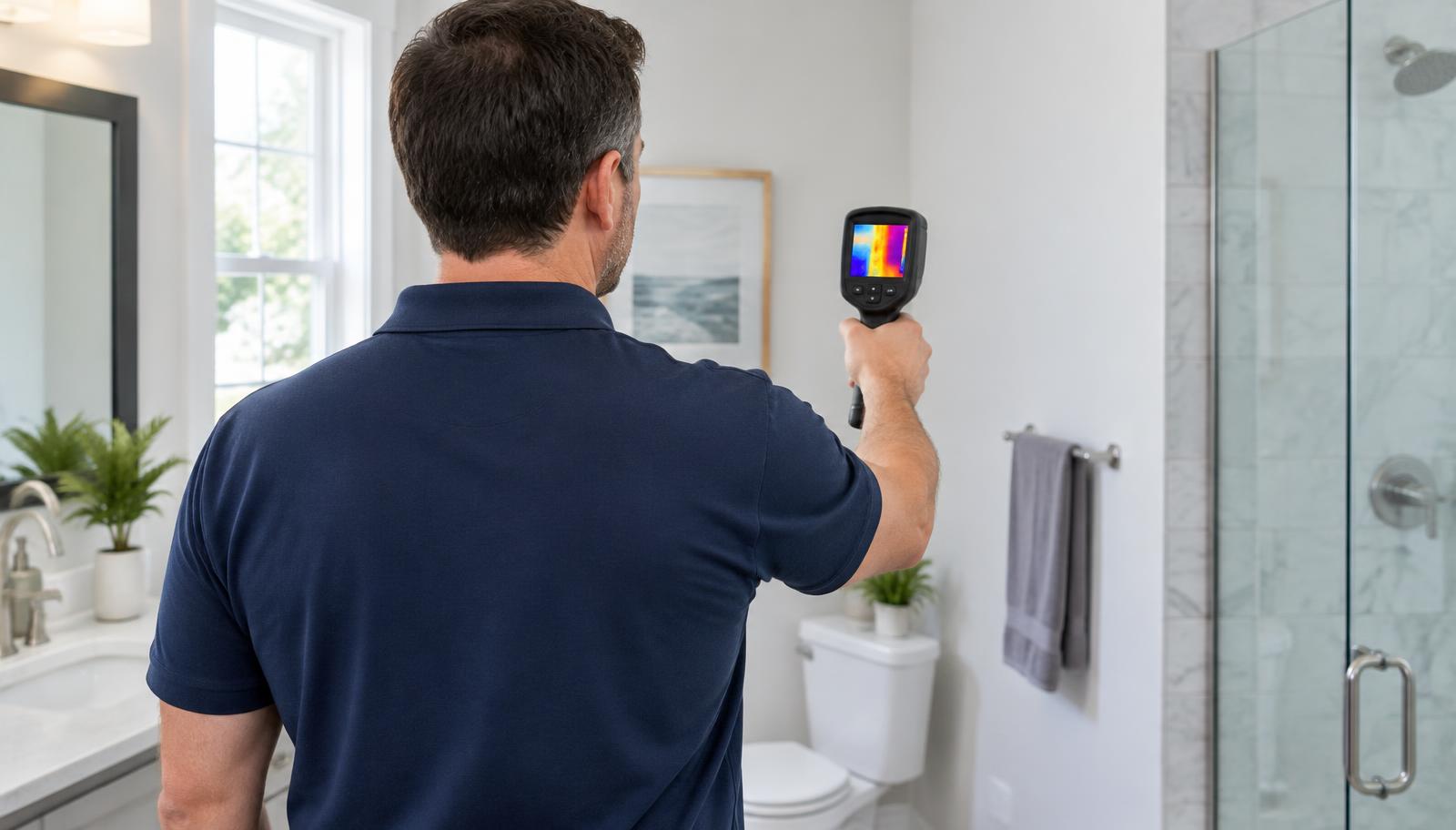
AirCare 365 inspects and tests only. We don't sell removal. A visit includes moisture mapping, thermal imaging, air samples compared with outdoors and a clear report that tells you whether you're dealing with steam or a leak. AirCare 365 books visits across the 9 Bay Area counties today and is opening in Los Angeles, Orange County, San Diego and Sacramento next, with the same prices statewide. An AirCheck is $595, or $520 online, with nothing charged at booking.
Frequently asked questions
Why does mold keep growing on my bathroom ceiling?+
Usually because shower steam condenses on the ceiling and isn't vented out fast enough. Run a fan that vents outdoors for 20-30 minutes after showers.
Can I clean bathroom ceiling mold myself?+
The EPA says areas under about 10 square feet can usually be cleaned by the homeowner with detergent and water, using gloves and eye protection. Larger or recurring areas need professional help.
Should I use bleach on bathroom ceiling mold?+
The EPA doesn't recommend bleach as a routine cleaner for mold. Detergent and water work on hard surfaces. Never mix bleach with ammonia.
Can I paint over mold on a ceiling?+
No. Clean and dry the area first. Painting over mold hides it and it often comes back through the paint.
How do I know if bathroom ceiling mold is from a leak?+
Leak mold often appears as one defined patch with yellow or brown staining, soft drywall, or a location below plumbing or the roof. A moisture meter or thermal camera can confirm it.
Want measured information about your home?
AirCare 365 provides mold inspection and mold and indoor air quality testing across the Bay Area.
Sources
Serving San Francisco, San Mateo, Menlo Park, San Jose, Sunnyvale, Palo Alto, Oakland, Fremont and the rest of the Bay Area.