Quick answer
Choose a mold inspection professional who is independent from remediation, uses moisture meters and thermal imaging, takes indoor and outdoor air samples, sends them to an independent lab and delivers a clear written report. Ask about all of that, plus pricing and insurance, before you book. In the Bay Area, expect a complete inspection with lab analysis to cost a few hundred dollars; AirCare 365's AirCheck is $520 online with $0 due today.
Key takeaways
- Independence matters: inspectors who also sell removal have a conflict of interest.
- Good inspections find moisture sources, not just spores.
- An outdoor control sample and an independent lab make results meaningful.
- Ask for a sample report before you book.
- Clear, all-in pricing beats a low base fee plus per-sample charges.
This guide is general information, not medical advice. If you have health concerns, please consult a medical professional.
Why the inspector you choose matters
Two mold inspections of the same home can produce very different results. One might be a quick walk-through with a single air sample and a quote for removal. Another might be a careful, two-hour visit with moisture mapping, thermal imaging, several air samples and a detailed report. Both are called a 'mold inspection', but only one gives you information you can act on with confidence.
Because mold decisions can involve thousands of dollars in repairs, a home purchase or a dispute with a landlord, the quality and independence of the inspection matter. This guide walks through what to look for.
Independence: the first question to ask
Some companies both inspect and remediate. They may offer free or very low-cost inspections because the real business is removal work. That doesn't mean every such inspection is wrong, but it does create a conflict of interest: the company that finds the problem is also the one paid to fix it.
Independent inspectors only inspect and test. Their job is to describe what they observed and measured, and they're paid the same whether they find a problem or not. Many homeowners, buyers and even remediation contractors prefer independent inspections and clearance testing for exactly that reason.
"Free inspection" vs independent testing
Free inspection
- Often offered by remediation companies
- Visit may lead to a sales quote
- Lab sampling usually extra
- Same company may do the repair
Independent AirCare 365 visit
- Testing-focused visit
- Lab-analyzed samples included
- Clear digital report
- $520 online, $0 today
Methods: what a thorough inspection includes
A professional inspection should combine several methods, because each one answers a different question:
- Visual inspection answers: what can we see? Staining, growth, water damage, ventilation and drainage.
- Moisture meters answer: which materials are wet right now?
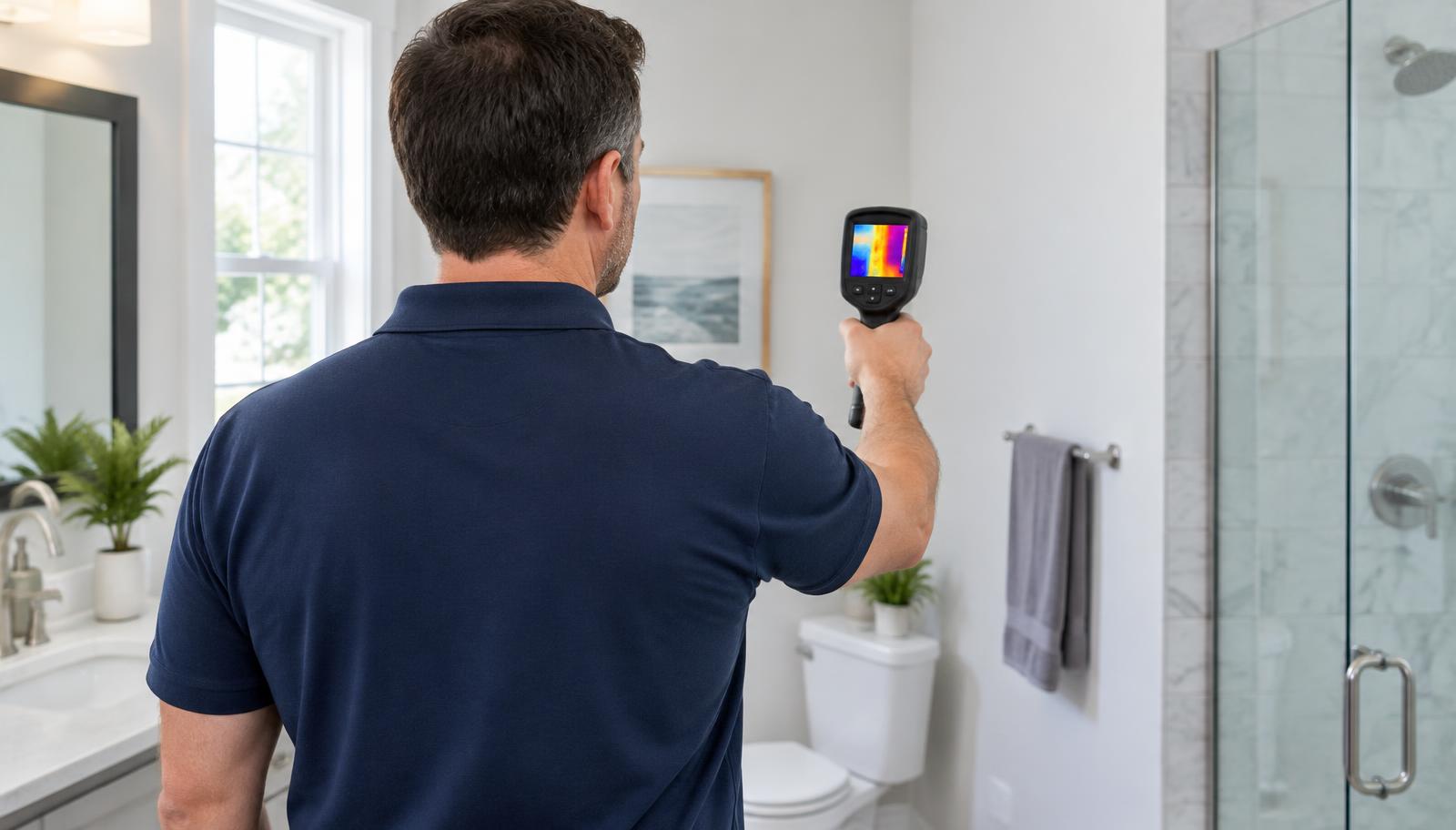
- Thermal imaging answers: where might moisture be hiding behind surfaces?
- Humidity readings answer: which rooms have conditions that favor mold?
- Air sampling answers: how does indoor air compare with outdoor air?
- Surface sampling answers: what is this specific visible growth?
Air sampling done right
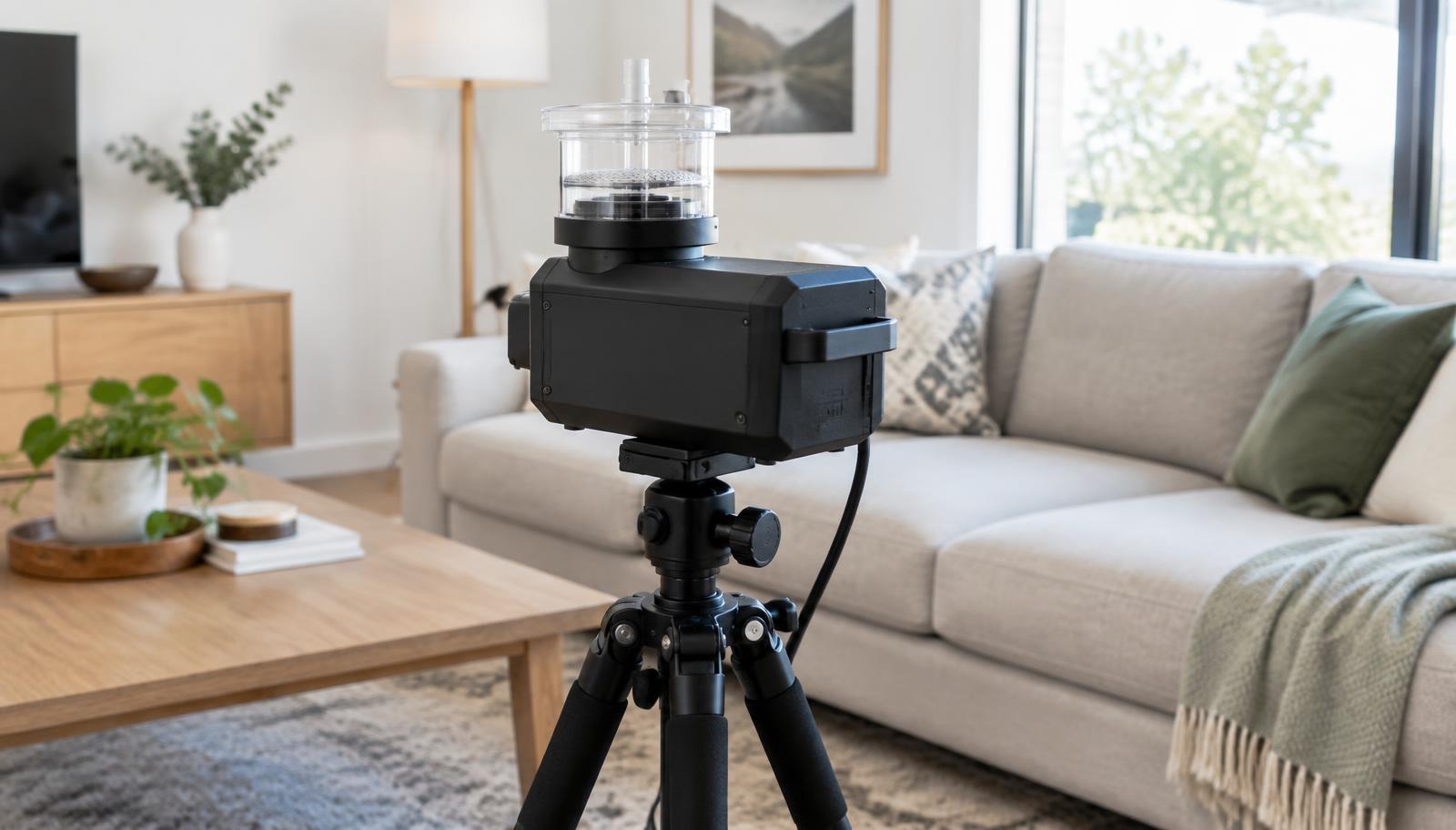
Air sampling is only meaningful when it's done carefully. Look for an inspector who uses a calibrated pump and spore-trap cassettes, records the sampling volume and always collects an outdoor control sample the same day. Samples should be sealed, labeled and sent to an independent laboratory with a chain-of-custody record.
Be cautious of inspections that rely only on settle plates or a single indoor sample with no outdoor comparison. Without context, the numbers are hard to interpret.
$0 today. Pay only when a visit happens.
AirCheck
$520
at the visit · 1 visit
AirCare 365
$437.50
per visit · 2 visits / yr
Premium
$405
per visit · 4 visits / yr
Laboratory analysis
Ask which laboratory analyzes the samples and whether it's independent from the inspection company. Many reputable labs participate in accreditation programs for environmental microbiology. The lab should report spore counts per cubic meter by type for each sample, including the outdoor control, so results can be compared.
Also ask how long results take. A few business days is typical. Rush analysis is sometimes available for real estate deadlines.
The report: what you should receive
The report is what you're really paying for. It's what you'll share with a contractor, a seller, a landlord or your insurance company. A strong report includes:
- The property address, date, weather conditions and areas inspected.
- Photos of observations, with locations.
- Moisture and humidity readings by room.
- Thermal images of areas of concern.
- The laboratory report with indoor and outdoor results.
- A plain-language summary of what was observed and measured.
- Practical next steps, without claims like 'safe' or 'mold free' that no test can prove.
Credentials, insurance and experience
California doesn't have a single state license specifically for mold inspection, so it's reasonable to ask about training, certifications from industry organizations and years of experience. Ask whether the company carries general liability and professional liability insurance. Experience with local housing types, such as Victorians, Eichlers, hillside homes with crawlspaces and garage conversions, is a real advantage in the Bay Area.
Pricing: what's fair in the Bay Area
Pricing structures vary. Some companies charge a low base fee and then add per-sample charges, which makes the final price hard to predict. Others quote an all-in price that includes a set number of samples and lab fees.
AirCare 365 uses all-in pricing. An AirCheck is $595 list, or $520 when you book online, and includes the full inspection, indoor and outdoor air sampling, lab analysis and a digital report. You pay $0 today and your card is charged only when the visit happens. Extra samples or add-on testing are always quoted and approved before any extra work. For ongoing monitoring, AirCare 365 is $437.50 per visit for two visits a year, and Premium is $405 per visit for four visits a year, charged per visit with no commitment.
Red flags to watch for
A few warning signs suggest you might be getting a sales visit instead of an inspection:
- A free inspection tied to a same-day removal quote.
- Claims that a home is 'toxic', 'safe' or 'mold free'.
- No outdoor control sample, or no lab analysis at all.
- Pressure to decide immediately.
- A report that's just a lab printout with no observations or moisture readings.
- Health diagnoses from someone who isn't a medical professional.
Questions to ask before you book
Copy these into an email or keep them handy on the phone:
- Do you perform mold removal or refer to a company you're affiliated with?
- What's included in the price, and are there per-sample fees?
- Do you use moisture meters and thermal imaging?
- Do you take an outdoor control sample?
- Which lab do you use, and how long do results take?
- Can I see a sample report?
- Are you insured?
- How long will the visit take, and do I need to be home?
Preparing for your inspection
A little preparation helps the inspector do a better job. Don't clean or paint over suspected areas right before the visit. Keep windows closed for several hours beforehand if possible so indoor air samples reflect normal conditions. Clear access to the attic, crawlspace, under-sink cabinets and the areas you're concerned about. Write down what you've noticed, when it started and any past leaks or repairs.
Independence, lab-analyzed samples and a clear report. Those three things separate good inspectors from the rest.
AirCare 365 · Bay Area
Want real numbers for your home?
Inspection, lab-analyzed air samples and a digital report. $520 online, $0 today.
Inspection, testing and remediation: who does what
It helps to understand the different roles involved in a mold situation, because the terms are often used loosely.
A mold inspection is an evaluation of the home: looking for visible growth, water damage and conditions that allow moisture to build up. Mold testing usually refers to collecting samples, such as air or surface samples, and sending them to a lab. A thorough professional visit does both. Mold remediation is the physical work of removing and cleaning affected materials, setting up containment and fixing damaged building components. It's done by a remediation contractor, often working alongside a plumber, roofer or general contractor who fixes the underlying water issue.
Clearance testing, sometimes called post-remediation verification, happens after remediation to confirm the work area has been cleaned and dried. It's best done by someone independent from the remediation company.
Special situations and what to look for in an inspector
Some situations call for extra experience. When you're comparing inspectors, ask whether they regularly handle the kind of job you have:
- Home purchases: fast scheduling, rush lab options and reports that are easy for agents and sellers to read.
- Rental properties: clear documentation that landlords and tenants can both rely on.
- Post-remediation clearance: independence from the remediation company and a clear comparison with pre-remediation conditions.
- Hillside homes with crawlspaces: comfort working in tight spaces and experience with drainage issues.
- Mid-century homes like Eichlers: familiarity with radiant slab floors, glass walls and flat roofs.
- Multi-unit buildings: experience documenting conditions for HOAs and neighbors.
- Post-flood or water damage: understanding of how quickly materials need to dry and when professional remediation is recommended.
How long does it take, and when will I get results?
Most single-family homes in the Bay Area take about 1.5 to 3 hours on site. Smaller condos may take less, and large homes with several areas of concern may take longer. Labs typically return spore trap results in a few business days, and many offer faster turnaround for real estate deadlines at an extra cost.
A good inspector tells you when to expect the report and how it will be delivered. AirCare 365 saves every report to your Home Air Health Record, so you can find it later, share it with a contractor and compare it with future visits.
Why ongoing monitoring can make sense
A single inspection is a snapshot. For many homes, that's all that's needed. But in the Bay Area, where conditions change with the rainy season and many homes are decades old, some homeowners prefer to check periodically. Seasonal visits, typically before and after the rainy season, show whether moisture readings and air results are stable or changing.
Ongoing monitoring is especially useful after a repair or remediation, when you want to confirm the fix is holding; in homes with a history of leaks; in fog-belt homes with persistent humidity; and for landlords who want a record over time. AirCare 365 offers two-visit and four-visit plans, charged per visit with no commitment, so you only pay for visits that happen.
Understanding the numbers without the jargon
Mold reports can feel intimidating, with Latin names and numbers in the thousands. A good inspector translates them. Ask them to walk you through three things: how indoor totals compare with the outdoor control, whether any spore types are much higher indoors than outdoors, and how the lab results line up with the moisture readings and observations in each room.
If an inspector can't explain the results in plain language, or relies on alarming words instead of specifics, that's a sign to get a second opinion.
A walk-through of a good inspection report
It's easier to judge an inspector once you know what a strong report looks like. Imagine a report for a three-bedroom home with a musty hallway closet.
The first page gives the address, the date, the weather that day and who was present. A short summary follows in plain language: for example, that the hallway closet had elevated moisture readings on the lower exterior wall, that relative humidity in that closet was higher than in the rest of the home, and that the closet's air sample showed higher counts of a common water-related spore group than the living room and the outdoor control.
Next come the room-by-room observations, each with photos, moisture readings, humidity and temperature, and thermal images where relevant. Then the lab report, with each sample's location, volume and results by spore type, and the outdoor control side by side. Finally, practical next steps: have a contractor evaluate the exterior wall, reduce humidity in the closet, consider removing affected materials following EPA guidance, and re-check after repairs.
Notice what's missing: no claims that the home is 'toxic', no health diagnoses and no pressure to buy a service from the inspector. That's what an independent report looks like.
The real cost of choosing the wrong inspector
A few hundred dollars saved on an inspection can cost much more later. The most common problems homeowners describe after a poor inspection are:
- Over-scoped remediation: paying to remove far more material than necessary because the inspection didn't pinpoint the moisture source.
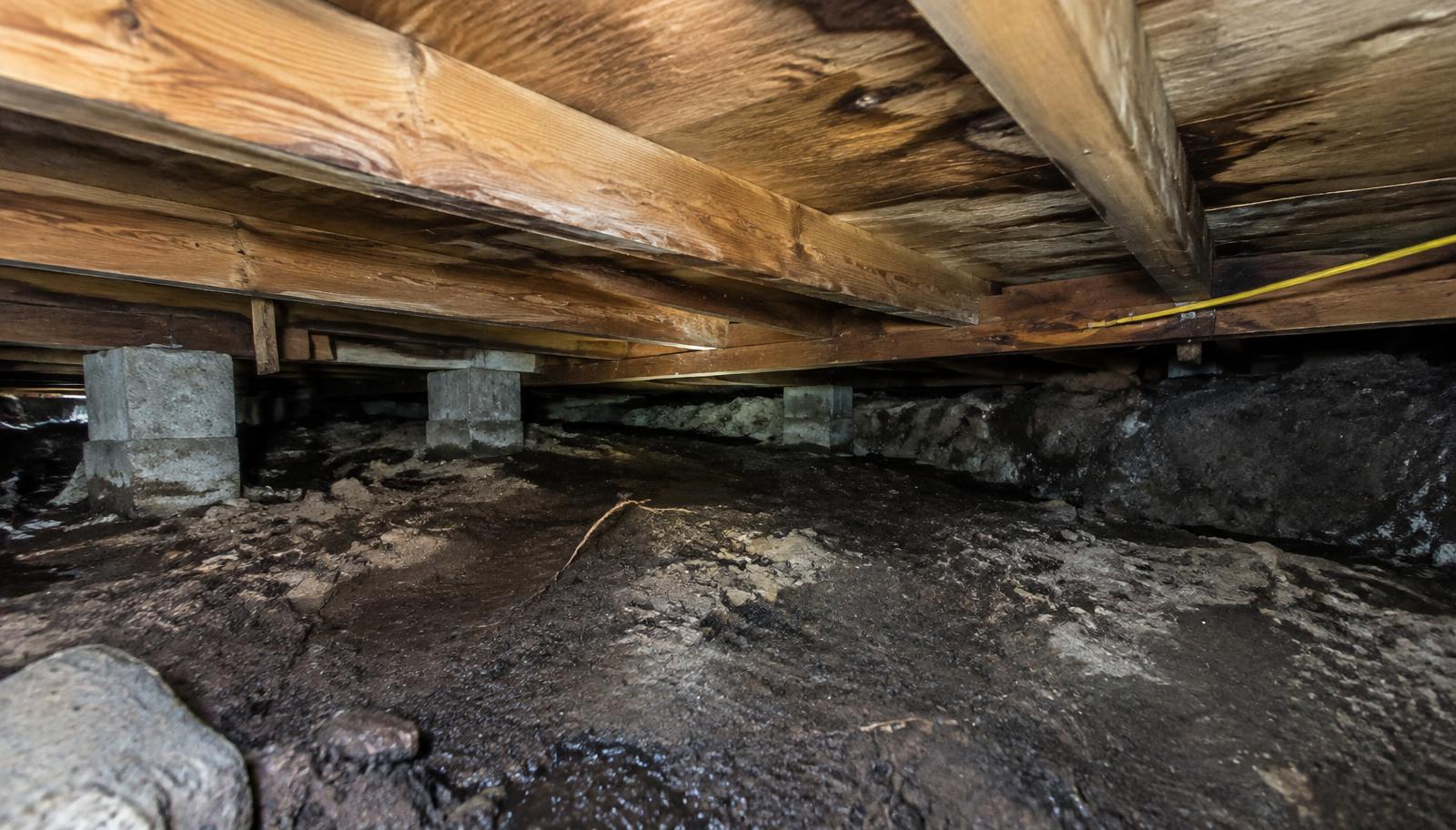
- Under-scoped remediation: cleaning visible growth without finding the leak, so the problem returns within a season.
- Missed moisture: an air sample alone didn't show a slow leak inside a wall, which kept damaging materials for another year.
- Unusable reports: a lab printout with no photos or readings that a seller, landlord or insurance adjuster won't take seriously.
- Repeated testing: needing a second inspection to get information the first one should have provided.
Bay Area notes: what local experience adds
The Bay Area's housing and climate vary so much that local experience genuinely helps. An inspector who works across the region knows that fog-belt homes in San Francisco and Pacifica often have humidity problems in exterior closets; that Oakland, Berkeley and Marin hillside homes frequently have crawlspace drainage issues; that Peninsula and South Bay Eichlers have radiant slabs and flat roofs with their own leak patterns; that inland homes in Walnut Creek, Pleasanton and Napa see big temperature swings that affect attics; and that North Bay homes in wooded areas can stay damp long after rain.
When you call an inspector, it's fair to ask how often they work in your city and with your type of home. The answer tells you a lot about how quickly they'll know where to look.
- San Francisco and Pacifica: fog, exterior walls, garages and in-law units.
- Oakland, Berkeley and Marin hills: crawlspaces, drainage and shaded, wooded lots.
- Peninsula and South Bay: Eichlers, slab-edge moisture and plumbing leaks in mid-century homes.
- East Bay inland (Walnut Creek, Pleasanton, Danville): attics, HVAC and summer humidity in closed-up homes.
- North Bay (Sonoma, Napa, Solano): rural properties, wells, older ranch homes and seasonal storms.
Why homeowners choose AirCare 365
AirCare 365 is an independent inspection and testing company serving all nine Bay Area counties from our office at 345 W Portal Ave in San Francisco. We don't sell remediation. Every visit includes moisture mapping, thermal imaging, humidity readings, indoor and outdoor air sampling, independent lab analysis and a digital report in your Home Air Health Record. Pricing is all-in, and you pay $0 today.
Call (415) 965-5036, book online, or start with the free Home Mold & Air Risk Check to see whether an inspection makes sense for your home.
Frequently asked questions
Should a mold inspector also do mold removal?+
Many homeowners prefer an independent inspector who doesn't sell removal, so findings aren't tied to a sale. Independent clearance testing after remediation is also common.
Is there a license for mold inspectors in California?+
California doesn't have a single state license specifically for mold inspection. Ask about training, industry certifications, insurance and experience.
How much should a mold inspection cost?+
It depends on what's included. AirCare 365's AirCheck, with inspection, indoor and outdoor air sampling, lab analysis and a report, is $520 online with $0 due today.
What should a mold inspection report include?+
Photos, moisture and humidity readings, thermal images, lab results with an outdoor control, a plain-language summary and practical next steps.
Are free mold inspections worth it?+
Free inspections are often offered by companies that sell remediation. They can be useful, but an independent inspection gives you an objective second opinion.
Want measured information about your home?
AirCare 365 provides mold inspection and mold and indoor air quality testing across the Bay Area.
Sources
Serving San Francisco, San Mateo, Menlo Park, San Jose, Sunnyvale, Palo Alto, Oakland, Fremont and the rest of the Bay Area.