
Quick answer
Many Bay Area seniors live in homes they've owned for decades, with original plumbing, windows and ventilation. Small leaks and damp rooms can go unnoticed, especially if a parent spends most of their time in one or two rooms or has a reduced sense of smell. Regular moisture and air checks give families measured information and an early warning, without anyone having to guess. Testing isn't medical care; health concerns belong with their doctor.
Key takeaways
- Long-owned homes often have aging plumbing, roofs and windows — the usual sources of hidden moisture.
- Seniors may not notice musty smells or slow leaks, and may avoid crawling under sinks or into attics.
- Adult children can book, attend remotely and receive the report digitally.
- In-law units, garages converted to living space and basement rooms deserve extra attention.
- Two visits a year is a common schedule; four for homes with past water damage.
This guide is general information, not medical advice. If you have health concerns, please consult a medical professional.
Why aging-in-place homes deserve a closer look
Many older Bay Area residents have lived in the same home for thirty or forty years. That stability is wonderful, and it also means the house has aged alongside them: galvanized or older copper pipes, original single-pane windows, roofs past their expected life, and bathrooms that were never fitted with exhaust fans.
At the same time, day-to-day routines change. A parent might use only the kitchen, bedroom and one bathroom, leaving other rooms closed and unventilated. They may no longer check under sinks, in the garage or in the attic. And a reduced sense of smell — common with age — can mean a musty odor goes unnoticed for months.
Families usually find out about moisture problems the hard way: a stain spreads across a ceiling, or a contractor opens a wall for another reason. Regular checks are a gentler way to stay ahead of that.
Where moisture hides in older homes
These are the places inspectors check first in long-owned Bay Area homes:
- Under kitchen and bathroom sinks, where supply lines and drains slowly fail.
- Around toilets and tubs with old caulk or wax rings.
- Behind the refrigerator, washer and water heater.
- Single-pane windows that collect condensation every morning, especially on the foggy side.
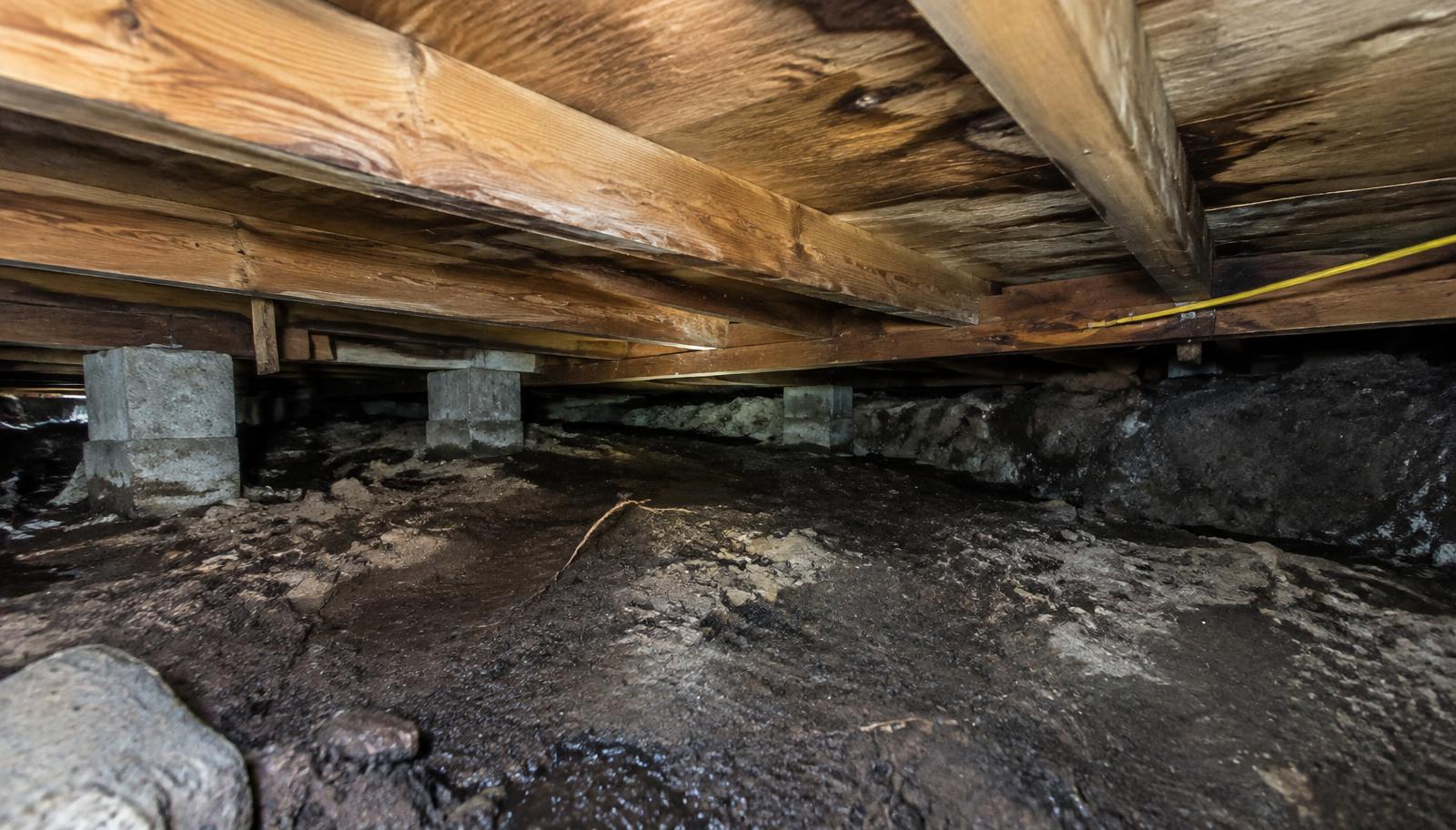
- Crawlspaces and basements on hillside lots in Oakland, Berkeley, Marin and the Peninsula.
- Attics below aging roofs or where bathroom fans vent into the attic instead of outside.
- Rooms that stay closed — spare bedrooms, sewing rooms and storage rooms.
Common moisture hotspots in Bay Area homes
- 1Attic & roof deck
- 2Bathroom ceiling
- 3Windows & sills
- 4Under sinks
- 5Behind appliances
- 6Crawlspace / garage
In-law units, ADUs and converted spaces
Many families bring a parent closer by converting a garage, basement or backyard structure into living space. These spaces can be comfortable and affordable, and they also come with specific moisture risks: concrete slabs that wick ground moisture, limited insulation, small bathrooms without adequate ventilation, and older construction that was never meant for full-time living.
If a parent is moving into a converted space, a check before move-in establishes a baseline, and a follow-up after the first rainy season shows how the space holds up.
Organizing checks from a distance
Many adult children live across the Bay or out of state. The process is designed so you can handle it remotely:
- Book online with your own email and add your parent's address and phone number.
- We confirm the appointment with you and, if you like, with your parent.
- You can join by phone during the walkthrough or simply ask a neighbor or relative to open the door.
- The digital report goes to your account, where you can share it with siblings, a contractor or your parent's doctor.
- Nothing is charged at booking; the card on file is charged when the visit happens.
Five steps from question to answer
- 1
Inspect
Room-by-room visual check
- 2
Measure
Moisture, humidity, thermal
- 3
Sample
Indoor + outdoor air
- 4
Lab
Independent analysis
- 5
Report
Clear next steps
Rooms that stay closed are where moisture goes unnoticed the longest.
AirCare 365 · Bay Area
Want real numbers for your home?
Inspection, lab-analyzed air samples and a digital report. $520 online, $0 today.
A family example
Distance often means problems are found late.
What testing can and can't do
A visit documents conditions: humidity, moisture, thermal patterns, lab-analyzed air samples compared with outdoor air, and practical next steps. It can't diagnose health issues and it can't prove a home contains no mold, because spores are always present in air.
If your parent has health concerns, please talk with their doctor. Many families bring the report to appointments as context about the home.

Simple habits that help
A few low-effort changes make a real difference in older homes:
- Put a hygrometer in the rooms your parent uses most and check it on visits; aim for 30–50%.
- Open closed rooms for an hour or two each week, or run a small fan.
- Replace worn caulk around tubs and sinks.
- Add a leak sensor under sinks and near the water heater — many send alerts to your phone.
- Keep boxes and furniture a few inches off exterior walls.
Frequently asked questions
Can I book for my parent if I don't live nearby?+
Yes. Book with your email and your parent's address. We coordinate access and send the digital report to your account.
How often should an older home be checked?+
Twice a year is common — after the rainy season and in late summer. Homes with past water damage often choose four visits.
Does testing tell us if the home is making my parent sick?+
No. We measure home conditions only. Health questions belong with their doctor; the report can be useful context.
Do you check in-law units and ADUs?+
Yes. Converted garages, basements and backyard units are included like any other living space.
Is anything charged when I book?+
No. Your card is charged only when each visit happens.
Want measured information about your home?
AirCare 365 provides mold inspection and mold and indoor air quality testing across the Bay Area.
Sources
Serving San Francisco, San Mateo, Menlo Park, San Jose, Sunnyvale, Palo Alto, Oakland, Fremont and the rest of the Bay Area.
Related guides
- Mold Allergy Symptoms at Home: What to Notice, What It Might Mean, and When to Test
- Mold, Kids and Allergies: Why Bay Area Families Test 2–4 Times a Year
- Assisted Living and Senior Care Facilities: An Indoor Air and Moisture Checklist
- Hospitals and Clinics: Moisture and Mold Monitoring Basics for Facility Teams