
Quick answer
Public health agencies note that some people are sensitive to mold and may notice a stuffy nose, sneezing, itchy eyes or wheezing. The same symptoms have many other causes, so only a medical professional can tell you what's behind them. What a home test can do is measure the environment: humidity, hidden moisture, and how indoor air compares with outdoor air. That gives you and your doctor facts instead of guesses.
Key takeaways
- Symptoms people associate with mold (stuffy nose, sneezing, itchy eyes, coughing) overlap with pollen, dust mites, pets and colds. A doctor is the right person to sort that out.
- A pattern is useful information: symptoms that ease when you're away from home and return when you come back are worth writing down.
- Mold needs moisture. Bay Area fog, older homes, crawlspaces and winter storms are the usual local sources.
- Home testing measures conditions, not health. It compares indoor air with an outdoor control and looks for the moisture source.
- Households with allergies often check 2–4 times a year to track seasonal changes, not just once.
This guide is general information, not medical advice. If you have health concerns, please consult a medical professional.
Why people search for mold allergy symptoms
Most people land here for one of three reasons: someone in the home has been congested for weeks, a room smells musty, or there's a stain on a ceiling and everyone suddenly wonders whether it's connected to how they feel.
Those are all reasonable questions. Mold is part of the natural environment, and spores are in nearly all outdoor and indoor air. Public health agencies, including the CDC and the California Department of Public Health, describe mold sensitivity as something that affects some people and not others, and to very different degrees.
This guide won't tell you whether mold is causing anyone's symptoms. Nobody can do that from an article, and an inspector can't either. What it will do is explain what people commonly notice, why those signs are hard to interpret on their own, and how measured information about your home can help the conversation you have with your doctor.
What people commonly notice
Allergy organizations such as the Asthma and Allergy Foundation of America list signs that people with mold sensitivity may experience. They are the same kinds of symptoms that come with other indoor and outdoor allergens:
- A stuffy or runny nose that lingers.
- Sneezing, especially in certain rooms or after opening closets and cabinets.
- Itchy, watery or red eyes.
- Coughing or a scratchy throat.
- Wheezing or chest tightness in people who already have asthma.
- Itchy or irritated skin.
Why symptoms alone can't point to mold
Every item on that list has several possible causes. Pollen is heavy in the Bay Area for much of the year. Dust mites thrive in bedding and upholstered furniture. Pets, cooking fumes, cleaning products, new furniture and even dry winter air can all irritate eyes and noses.
That's why the most useful thing you can do before calling anyone is to notice patterns. Do symptoms ease when you travel? Are they worse in one bedroom? Do they flare after rain or on foggy mornings? Did they start after a leak, a move or a renovation? A simple log of when and where you feel better or worse is valuable context for a medical professional.
If the pattern seems tied to the home, the next question is whether something in the home has changed. That's where measurement helps.
The real driver: moisture
Mold spores are everywhere, but they only grow into mold where there's enough moisture for long enough. The EPA's guidance is direct: the key to mold control is moisture control.
In the Bay Area, moisture comes from a handful of predictable places. Coastal fog keeps western San Francisco, Pacifica and parts of Marin humid for much of the summer. Older homes have original windows, limited insulation and bathrooms without exhaust fans. Hillside lots channel rain under houses into crawlspaces. And the winter atmospheric-river storms test every roof, gutter and window seal at once.
A home can look spotless and still have a damp wall cavity behind a shower, a slow drip under a sink or a crawlspace that stays wet after every storm. Those hidden spots are what an inspection looks for.

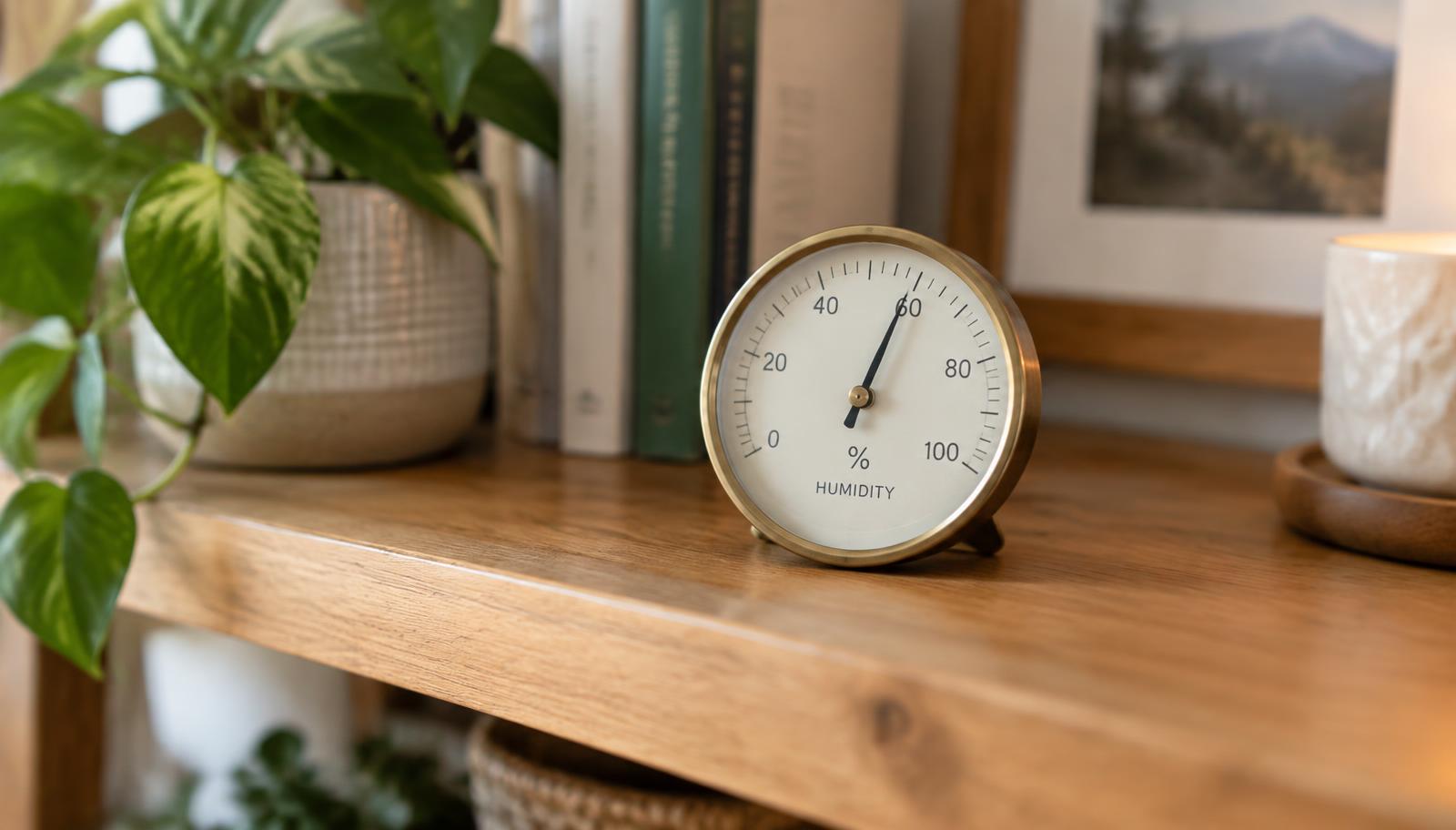
Aim for 30–50% relative humidity
The U.S. EPA recommends keeping indoor humidity below 60%, ideally 30–50%.
What a home air and mold test measures
A professional visit documents conditions. It doesn't diagnose anything and it can't prove a home contains no mold, because spores are always present in air. Here is what it does measure:
- Room-by-room humidity and temperature, which show where moisture collects.
- Moisture meter readings on walls, floors, cabinets and around plumbing.
- Thermal imaging to spot cool, damp areas behind surfaces, confirmed with a meter.
- Air samples: a measured volume of indoor air compared with an outdoor control taken the same day, analyzed by an independent lab.
- Surface samples where there's visible staining, when useful.
- A written report with photos, readings, lab results and practical next steps.

Five steps from question to answer
- 1
Inspect
Room-by-room visual check
- 2
Measure
Moisture, humidity, thermal
- 3
Sample
Indoor + outdoor air
- 4
Lab
Independent analysis
- 5
Report
Clear next steps
Testing can't diagnose anyone. It gives you and your doctor measured facts about the home.
AirCare 365 · Bay Area
Want real numbers for your home?
Inspection, lab-analyzed air samples and a digital report. $520 online, $0 today.
Why one test isn't the whole story
Indoor conditions change with the seasons. A home tested on a dry September afternoon can read very differently in February after a week of storms, or on a foggy July morning in the Sunset.
That's why households with allergies or sensitive family members often check more than once a year. Two visits (for example, late rainy season and late summer) show how the home behaves in wet and dry conditions. Four visits track every season and catch changes after leaks or renovations sooner. AirCare 365 includes two visits a year, and Premium includes four, charged per visit with no commitment.
What you can do at home today
Whether or not you test, these steps are what public health agencies consistently recommend:
- Keep indoor humidity below 60%, ideally 30–50%. A $15–$30 hygrometer in each bedroom makes this easy to watch.
- Run bathroom fans during and for 20 minutes after showers; use the kitchen hood when cooking.
- Fix leaks promptly and dry wet materials within 24–48 hours.
- Don't disturb suspected growth. Scrubbing or sanding can release more spores into the air.
- Wash bedding weekly and keep clutter off exterior walls and out of closets on the foggy side of the house.
- Keep a symptom and weather log to share with your doctor.
When to talk to a doctor, and when to test
If anyone in the home has health concerns, especially breathing difficulty, start with a medical professional. They can help figure out what's going on and whether allergy testing makes sense.
Consider a home test when there's a musty smell you can't place, a history of leaks or water damage, visible staining, condensation that forms on windows every morning, or when symptoms seem to follow a room or the weather. Bring the report to your doctor; it's the kind of measured information that helps a conversation move forward.
Frequently asked questions
Can a mold test tell me if mold is causing my allergies?+
No. A test measures conditions in your home. Only a medical professional can evaluate symptoms and their causes. Many people share their report with their doctor as extra context.
What humidity is best for allergy-prone households?+
The EPA suggests keeping indoor relative humidity below 60%, ideally between 30% and 50%.
How often should a home with allergies be checked?+
Many households check 2–4 times a year to see how the home behaves in wet and dry seasons. AirCare 365 includes 2 visits a year; Premium includes 4.
Does an air purifier fix mold?+
A purifier with a good filter can reduce particles in the air, but it doesn't remove the moisture that lets mold grow. Fixing moisture comes first.
How much does a visit cost in the Bay Area?+
AirCheck is $595, or $520 booked online, with $0 due today. Your card is charged when the visit happens.
Want measured information about your home?
AirCare 365 provides mold air sampling and mold and indoor air quality testing across the Bay Area.
Sources
Serving San Francisco, San Mateo, Menlo Park, San Jose, Sunnyvale, Palo Alto, Oakland, Fremont and the rest of the Bay Area.
Related guides
- Mold, Kids and Allergies: Why Bay Area Families Test 2–4 Times a Year
- Senior Home Living: Indoor Air and Mold Checks for Aging Parents in the Bay Area
- Assisted Living and Senior Care Facilities: An Indoor Air and Moisture Checklist
- Hospitals and Clinics: Moisture and Mold Monitoring Basics for Facility Teams